
“A History of Suffering and Isolation: An In-Depth Analysis of the Challenges Facing the Banyamulenge”
In a detailed analysis conducted by analyst Girinka Kabare William, he revisits the long-standing challenges affecting the Banyamulenge, with particular emphasis on the role played by the former state of Zaïre—now the Democratic Republic of the Congo—in perpetuating the region’s isolation and persistent insecurity.
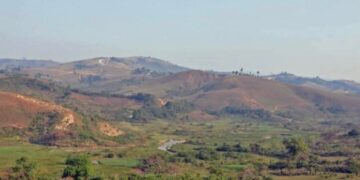
Kabare argues that the insecurity and marginalization of the Banyamulenge are not recent developments, but rather deeply rooted in history. He explains that, for decades, the Zaïrean government deliberately neglected the development of the Mulenge region, especially in terms of basic infrastructure such as roads. This neglect left the area in severe isolation, with significant consequences for the livelihoods of its السكان and their ability to access assistance during times of crisis.
The lack of roads and communication networks made it extremely difficult for residents to access essential services. It also hindered those attempting to flee violence, as they faced major logistical obstacles. Kabare notes that many Banyamulenge who managed to leave their homeland and settle elsewhere found improved living conditions, which discouraged them from returning to their native highlands. According to him, this situation aligned with what he describes as the intentions of “adversaries” seeking to permanently displace the population from their ancestral land.
In his analysis, Kabare further contends that instead of correcting these historical injustices, the government of the Democratic Republic of the Congo has continued along a path that exacerbates the region’s stagnation. He claims that, rather than fostering peace and development, there have been actions involving the national army (FARDC), in collaboration with Burundian forces and armed groups such as Wazalendo and FDLR, which he alleges are aimed at targeting the Banyamulenge.
Despite these serious allegations, Kabare places strong emphasis on what he يرى as a viable solution: self-defense and self-reliance. He explains that the conflict involving the Banyamulenge is not about seeking political power, but rather about survival and the protection of their community.
It is in this context that he underscores the need for what he calls “collective mobilization,” referring to broad-based community cooperation in self-defense and mutual support. He states: “Mass mobilization is the only sustainable solution that can bring lasting peace to the highlands of Mulenge.” He presents this as a more reliable path to stability than waiting for external assistance that may not arrive in time.
Kabare further argues that ignoring the plight of civilians only perpetuates a cycle of endless conflict. In his view, what is urgently needed is decisive action aimed at protecting lives and strengthening local capacity for self-defense.
Looking ahead, he highlights the importance of infrastructure development—particularly road construction—as a cornerstone of sustainable progress. He explains that once the region has reliable roads and communication systems, displaced السكان are more likely to return, and investors and visitors will be encouraged to come, thereby boosting the local economy and restoring public confidence.
In conclusion, Kabare invokes a proverb emphasizing individual responsibility in safeguarding one’s own interests: “He who cultivates his field does not abandon it, and he who clears weeds remains ever vigilant.” He interprets this as a call for people not to neglect their responsibilities, but rather to work together to protect and rebuild their homeland.
This analysis by Girinka Kabare William provides a comprehensive perspective on how history, politics, and geography have contributed to ongoing insecurity, while also proposing a path forward grounded in self-reliance and collective action as a foundation for lasting peace.