
A Munyamulenge Forced to Kneel While Being Questioned About His Citizenship in His Own Country, Shocking the World With Open Discrimination
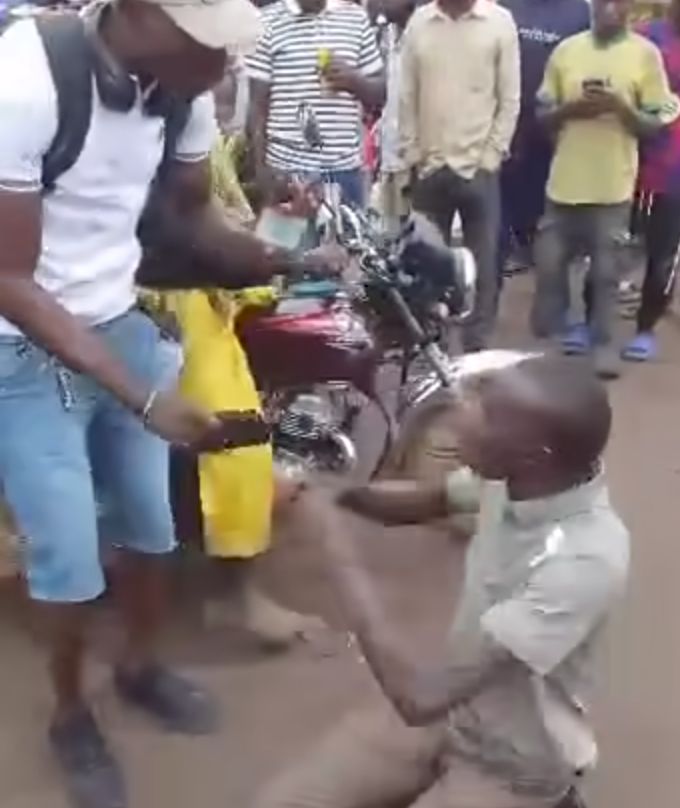
In the city of Kalemie, in Tanganyika Province of the Democratic Republic of Congo (DRC), an incident has sparked intense debate and concern at both national and international levels. Videos circulating on social media show a young Munyamulenge man, who was legally engaged in livestock trade, being forced to kneel in public by fellow citizens while being asked a humiliating and disturbing question: “Who are you?”
For many observers, this question is seen as a clear sign of ethnic and origin-based discrimination, especially because it was directed at a citizen within his own country, who had not been accused of any crime. As seen in the videos recorded over the past weekend, the young man was publicly abused and compelled to justify his nationality and origin, despite being a Congolese citizen with full rights like any other.
This act has been widely condemned as an affront to human dignity and a violation of fundamental human rights. Forcing someone to kneel, humiliating them, and questioning their identity in their own country contradicts the values of a lawful state founded on unity, mutual respect, and equality among its citizens.
The incident comes amid ongoing concerns over discrimination and persecution in eastern DRC, where members of the Banyamulenge community and other Kinyarwanda-speaking populations have long been portrayed as foreigners or accused of links to armed groups. Such perceptions continue to marginalize them, exposing them to fear, isolation, and serious danger, despite their legal status as citizens.
At the international level, the human rights treaties signed by the DRC stipulate that no citizen should be humiliated, abused, or forced to justify their citizenship in a degrading manner, especially when they have committed no crime. What happened in Kalemie highlights a serious gap in the implementation of these principles and in the protection of human dignity.
Human rights defenders are calling on Congolese authorities to provide immediate and clear explanations, to conduct an independent, impartial, and thorough investigation, to hold those responsible accountable under the law, and to put in place concrete measures to protect traders and all citizens, regardless of ethnicity, language, or origin.
This incident has once again raised a profound moral question for many: Is it acceptable for a citizen, in their own country, to be forced to kneel, humiliated, and questioned about who they are by fellow citizens with equal rights?
For many, the answer is clear no. A state governed by the rule of law must protect the rights of all, promote unity, respect, and equality because these are the foundations of lasting peace and genuine reconciliation.

Rugeyo Yasubije Kongolo ku By’Ibitero bya Drones muri teritware ya Fizi Rumenge Rugeyo Olivier, wigeze kwiyamamariza kuba Umudepite ku rwego rw’Igihugu muri Teritwari ya Fizi, yasohoye inyandiko zikomeye...
Read moreDetails