

FARDC and Burundian Forces in a Major Plan to Reshape the Mulenge Region and Retake Minembwe
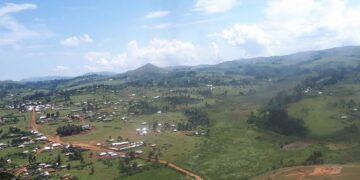
As security continues to deteriorate in the highlands of Mulenge, emerging reports suggest that the Armed Forces of the Democratic Republic of Congo (FARDC), in collaboration with Burundian troops, may be preparing a major military operation that could be considered decisive—aimed either at fully retaking the Minembwe area or, if unsuccessful, withdrawing toward Uvira, Baraka, and Burundi.
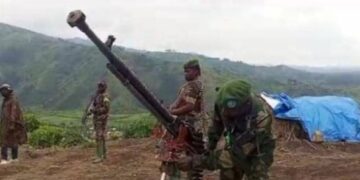
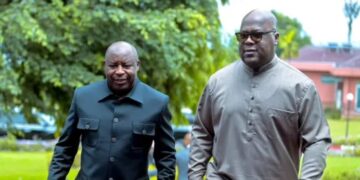
This information is contained in documents received by the editorial team of Minembwe Capital News from a FARDC soldier who requested anonymity. According to the source, the FARDC commander leading operations in the Fizi highlands submitted a report to Kinshasa and Gitega, indicating that efforts to capture Minembwe had failed and requesting authorization to deploy maximum force, including heavy weaponry, before making a final decision to retreat.
Although these reports have not been officially confirmed, multiple developments on the ground indicate that FARDC and Burundian forces have long attempted to regain control of Minembwe but have been repeatedly repelled by the MRDP-Twirwaneho group, which claims to defend Congolese citizens of the Banyamulenge community.
The Mulenge region is no stranger to conflict. For over a decade, it has been a hotspot for violence driven by ethnic tensions, land disputes, and political and security interests. These conflicts have had severe consequences for civilians, particularly the Banyamulenge, who have frequently been targeted by various armed groups, some allegedly operating in coordination with government forces.
In late February 2025, intense fighting resulted in MRDP-Twirwaneho gaining control over large parts of Minembwe and Mikenke after pushing out FARDC and Burundian forces that had established strong positions in the area. Since then, there have been repeated ground and aerial offensives aimed at recapturing these مناطق, but they have not achieved the desired outcomes.
A notable trend in recent attacks is their concentration on villages inhabited by Banyamulenge civilians, who continue to bear the brunt of the violence. Reports from various areas indicate that many people have been killed, homes destroyed, livestock looted or slaughtered, and infrastructure severely damaged.
In the Ndondo area, located in the Bijombo groupement of Uvira territory, heavy fighting has persisted for about four consecutive days. FARDC and Burundian forces have deployed significant reinforcements from Uvira and Burundi, reportedly operating alongside armed groups such as Imbonerakure, Wazalendo, and FDLR.
The attacks have particularly targeted villages in areas such as Mitamba, Gongwa, Gatanga, and others, with claims that the objective is to completely dismantle Banyamulenge settlements in those highlands.
Although no official government statement explicitly outlines a plan targeting the Banyamulenge as an ethnic group, analysts and observers point to several indicators suggesting possible underlying objectives behind these military operations:
- Strategic territorial control: Minembwe and Ndondo are considered areas of high strategic and economic importance, crucial for controlling key zones.
- Neutralizing MRDP-Twirwaneho: The group is seen as a major obstacle to government control in the region.
- Demographic reshaping: There are concerns that targeting Banyamulenge villages may aim to displace the population and alter the demographic composition of the area.
- Reasserting state authority: The region is viewed as difficult to govern, making it significant for reinforcing the authority of the central government in Kinshasa.
On Burundi’s side, its military involvement appears linked to broader regional security cooperation and strategic interests.
The Future of the Region: Civilian Concerns and the Absence of Political Dialogue
As the situation stands, Minembwe and Ndondo in the Mulenge region remain entrenched in persistent conflict, with Banyamulenge civilians disproportionately affected. While reports of a final large-scale offensive remain unconfirmed, developments on the ground suggest the possibility of a broader strategy to reshape control and governance in the area.
What remains most alarming is that civilians continue to pay the highest price—killed, displaced, and stripped of their livelihoods—while political solutions and meaningful peace negotiations remain largely absent.
Analysts warn that without a sustainable resolution grounded in inclusive and substantive dialogue, the conflict risks escalating further, potentially plunging the Mulenge region into even deeper instability.