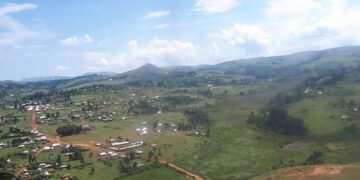

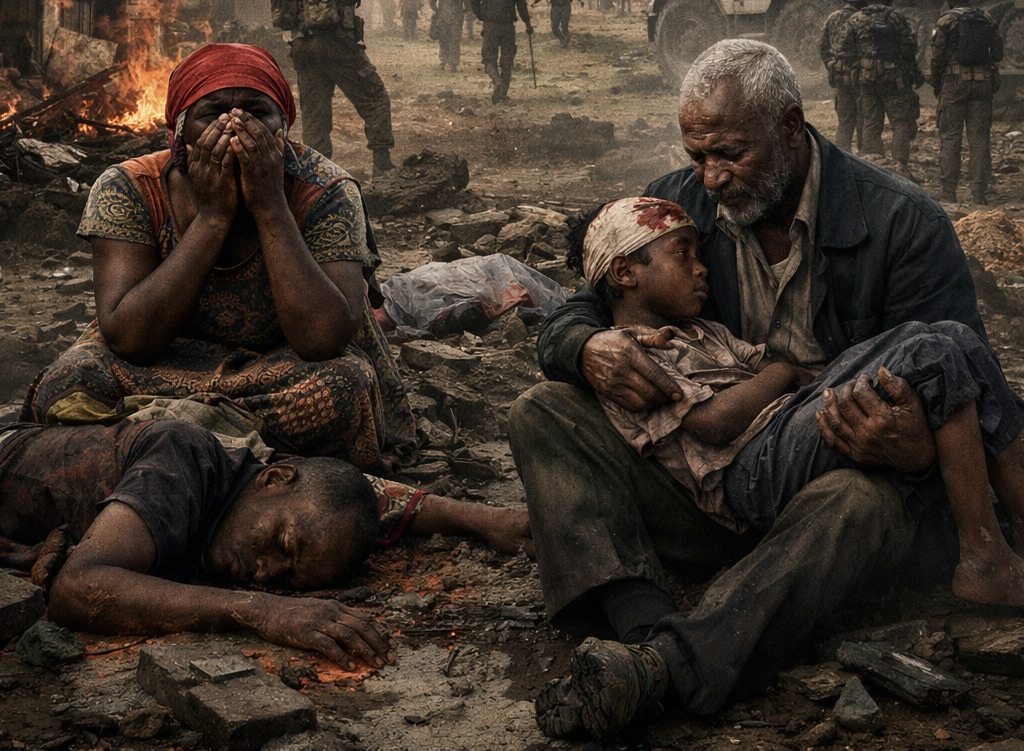
The eastern Democratic Republic of Congo, particularly towns like Uvira and Minembwe in South Kivu province, has become a stark and unflinching mirror held up to the world. It reflects not only the brutal realities on the ground but also the international community’s own shortcomings, its selective blindness, its convenient hypocrisy, and its repeated failure to live up to the human rights principles it so loudly champions.
For a fleeting moment just about a week a fragile ceasefire linked to the AFC/M23 coalition brought strange calm to these scarred regions. It felt like a rare breath of hope in a long nightmare of conflict But that pause was nothing more than a cruel illusion. When AFC/M23 forces withdrew, ostensibly to support peace efforts, the fragile peace shattered. Civilians were once again left defenseless in the face of a conflict that appears ruthlessly executed.
Since that withdrawal in mid January 2026, the humanitarian and security crisis has spiraled into nightmare territory. Ordinary people especially members of the Banyamulenge community (Congolese Tutsis long targeted in the region), but also other Congolese falsely accused of ties to AFC/M23 face unchecked terror. They endure organized campaigns of abuse with little to no protection.
A chilling report from a coalition of human rights NGOs and civil society groups lays bare the horror in unflinching detail. It documents a litany of grave crimes arbitrary arrests and detentions, brutal torture, rape and sexual violence against women and girls, targeted assassinations, extrajudicial killings, forced disappearances, abductions, and relentless persecution of entire communities.
These are not random acts born of wartime chaos. They form a deliberate, systematic strategy of terror one designed to sow deep fear in populations already battered by decades of discrimination, mass killings, and exclusion. The violence is consistent, calculated and carried out in plain sight.
Uvira and Minembwe have thus become tragic symbols of profound abandonment. The Congolese state has either proven incapable or unwilling to protect all its citizens equally, shirking its most basic duty. Even more damning is the abandonment by the wider international community. It proclaims unwavering commitment to human rights and civilian protection yet when confronted with overwhelming evidence of mass atrocities, it falls into a deafening silence.
That silence is not innocent neutrality it is complicity By tolerating or indirectly enabling regimes and forces that spill civilian blood powerful actors stain the very values they claim to defend. The United Nations flag, meant to stand for dignity, peace, and the safeguarding of the vulnerable, is being tarnished by inaction and willful ignorance.
Those who position themselves as guardians of global justice have failed their test. Choosing quiet diplomacy over decisive action in the face of documented horrors is not prudence it is moral surrender. Every unuttered condemnation, every delayed response, every avoided sanction adds weight to the machinery of violence and emboldens the perpetrators.
By allowing these crimes to continue unchecked, and by refusing to hold those responsible to account, the world sends a devastating message some lives matter less than others. This is an intolerable betrayal of conscience one that history will remember with shame.
Uvira is no longer just a remote battleground it has become the troubled conscience of humanity. It exposes a world that preaches justice yet turns away from injustice, that invokes international law while watching atrocities unfold, and that clings to comfortable illusions rather than confronting hard truths.
As long as this paralyzing silence endures as long as fear of bold action outweighs moral courage the bloodshed in Uvira, Minembwe and across eastern Congo will persist. And the shame of those who could have intervened but chose not to will endure as a permanent stain on our shared humanity.