
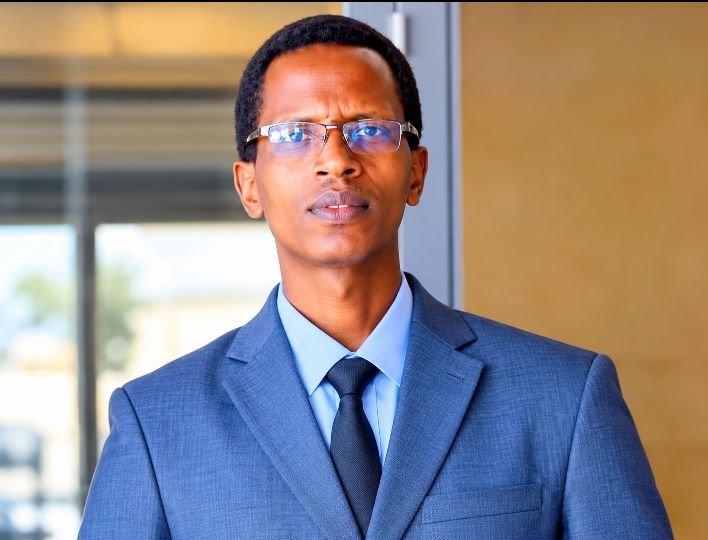
“Why Talk About Valuable Minerals and Not Valuable People?” Girinka Kabare William Responds to Amnesty International Report on the DRC
MINEMBWE CAPITAL NEWS (MCN)
Girinka Kabare William, a well-known analyst of developments in eastern Democratic Republic of the Congo (DRC), and a figure close to MRDP-Twirwaneho and the Alliance Fleuve Congo (AFC/M23), has commented on a recent report published by Amnesty International concerning the mining and trade of minerals in eastern DRC.
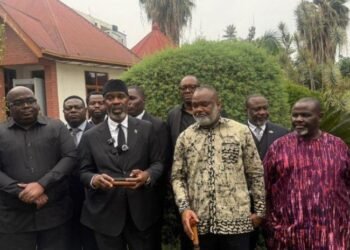
Girinka Kabare William made the remarks during an interview with Minembwe Capital News (MCN) on the morning of Saturday, 26/09/2026. He focused on the question of whether reports dealing with natural resources should also pay attention to the rights and living conditions of people residing in areas where mining activities take place.
In a document published on 21/09/2026, Amnesty International said it had conducted research into mining activities in Rubaya, Masisi Territory, North Kivu, as well as Lomera, in Kabare Territory, South Kivu.
The organization said it had documented allegations including unlawful killings, torture, arbitrary detention, forced labour, abductions and looting. Amnesty International also said it had investigated the illicit movement of gold and coltan, particularly into Rwanda.
“Why Talk About Valuable Minerals and Not Valuable People?”
Speaking to MCN, Girinka Kabare William questioned the focus of the report, arguing that while considerable attention is being given to the natural resources of eastern DRC, equal attention should be paid to the people living in the region and the human rights challenges they face.
He said:
“Why talk about valuable minerals and not valuable people? Are valuable minerals more important than people, the Banyamulenge?”
In his view, he said, the central issue should not be limited to natural resources, but should also encompass the lives, security and rights of the people living in these areas.
Girinka said that when international organizations conduct research in eastern DRC, there should be a balanced focus on both natural resources and the people he says continue to face security and human rights challenges.
Girinka Calls on Amnesty International to Address the Concerns of Local Communities
Girinka Kabare William criticized what he described as an emphasis on the issue of minerals, arguing that Amnesty International should also pay attention to what he considers injustices against certain communities, particularly Tutsi communities in eastern DRC.
He said:
“Amnesty should have talked about the injustices committed against Tutsis in eastern Congo instead of confusing the issue by talking about minerals.”
Girinka Kabare William also said that, in his view, AFC/M23 and Twirwaneho prioritize the issue of people and their security over mining or the trade in minerals.
He said:
“You cannot be fighting a struggle to defend people and at the same time have the opportunity to engage in the trade of minerals.”
He further stated:
“What matters to AFC/M23-Twirwaneho is people rather than these minerals.”
Girinka Addresses Rwanda’s Role in the Mineral Trade
Girinka also addressed the issue of Rwanda as a neighboring country to eastern DRC, arguing that even where mineral trade takes place, he sees no reason why Rwanda should be prevented from being a buyer.
He gave the example of ordinary goods crossing borders, arguing that in a market, a seller does not solely determine the buyer, but that the buyer also has a role in choosing what to purchase.
He said:
“When you take something to the market, you do not choose the buyer; rather, the buyer chooses what they are going to purchase.”
He added that Rwanda, like other countries, can be a buyer of products originating from eastern DRC.
“Are Minerals the Only Things Entering Rwanda?”
In another question, Girinka said reports concerning goods moving from eastern DRC into Rwanda should not focus exclusively on minerals.
He questioned why research should not also examine other products that he says cross the border, including beans, bananas, cassava, milk and other goods.
He said:
“Are minerals the only things entering Rwanda? That is the question I am asking.”
Calls on Amnesty International to Return to Its Human Rights Mandate
In concluding his remarks, Girinka Kabare William called on Amnesty International to place greater emphasis on what he considers the organization’s core responsibility of protecting human rights.
He said:
“Minerals have value, but a human being has greater value than those minerals that are called valuable.”
He called on Amnesty International to refocus on human rights, arguing that it should not concentrate solely on cross-border international trade.
What Amnesty International Says About Mining in Eastern DRC
In its document dated 21/09/2026, Amnesty International said its research focused on two mining sites: a coltan mine near Rubaya in Masisi, North Kivu, and a gold mine in Lomera, Kabare, South Kivu.
The organization said it documented allegations of serious abuses, including killings, torture, arbitrary detention, forced labour, forced recruitment and looting.
Amnesty International also said it had gathered evidence indicating that gold originating from the Lomera area was transported into Rwanda, and that it had investigated cross-border trade routes.
Meanwhile, Girinka Kabare William’s remarks focused on the need, in his view, to include the issues of people, security and the rights of communities in eastern DRC when analyzing the mineral trade, particularly those he identifies as Tutsi and Banyamulenge.
Minembwe Capital News (MCN)