

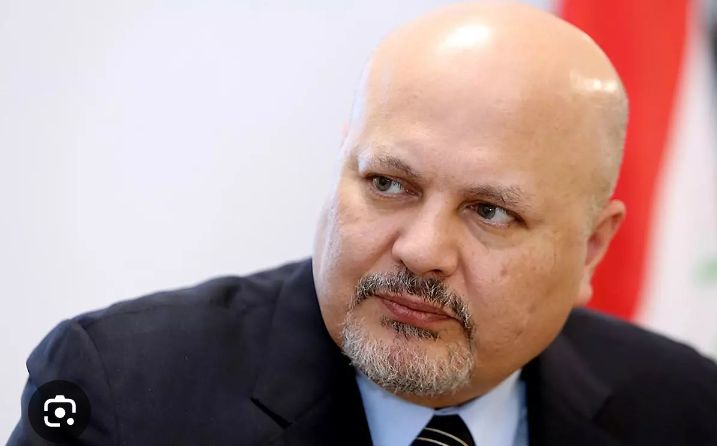
After Pursuing President Putin and Prime Minister Netanyahu: Karim Khan Faces a Legal Crisis Shaking the ICC
The International Criminal Court (ICC), headquartered in The Hague, Netherlands, is facing a significant institutional challenge following the temporary suspension of its Prosecutor, Karim Asad Ahmad Khan KC, amid serious allegations of misconduct and sexual harassment.
The decision follows an investigation into complaints filed in 2024 by a member of Khan’s close staff. The complainant alleged that she was subjected to sexual harassment and, on several occasions, pressured into engaging in unwanted sexual conduct. Karim Khan has consistently denied all allegations, maintaining that they are unfounded and false.
In a statement released by the ICC’s governing body, it was indicated that the decision to suspend Khan was based on recommendations and conclusions contained in an independent investigative report examining the allegations.
Court officials emphasized that Khan’s suspension does not constitute a dismissal from office. Rather, it is a temporary measure intended to safeguard the integrity of the investigation and preserve the confidence of the Court’s stakeholders. A final determination regarding his future is expected to be made during a special session of the Assembly of States Parties to the Rome Statute, the treaty that established the ICC in 1998.
Karim Khan was born in the United Kingdom in 1970 and is widely recognized as a distinguished expert in international criminal law. Throughout his career, he has gained prominence for his involvement in major cases concerning war crimes, crimes against humanity, and other serious international offenses.
Before being elected ICC Prosecutor in 2021, Khan served in several international judicial institutions, including the International Criminal Tribunal for Rwanda (ICTR), the International Criminal Tribunal for the former Yugoslavia (ICTY), and other United Nations-backed judicial mechanisms.
He succeeded Fatou Bensouda of The Gambia and assumed leadership of the ICC Office of the Prosecutor at a time when the international community was confronting numerous armed conflicts and geopolitical crises across different regions of the world.
During his four years as Prosecutor, Karim Khan has overseen several high-profile and often controversial decisions that have attracted global attention.
In 2023, the ICC issued arrest warrants for Russian President Vladimir Putin in connection with alleged crimes arising from the war in Ukraine. Khan described the move as a significant step in upholding international law and accountability.
In 2024, Khan also sought arrest warrants for senior Israeli and Hamas leaders over alleged war crimes and crimes against humanity committed during the Gaza conflict. The decision generated intense debate among major world powers and international human rights organizations.
He further continued investigations into major cases involving Sudan, Libya, the Democratic Republic of the Congo, Uganda, and other regions affected by serious conflicts.
Khan’s suspension comes at a time when the ICC is already facing substantial political pressure and institutional challenges.
Over the years, the Court has been criticized by some governments that accuse it of bias or of serving the political interests of powerful nations. Certain states have argued that the ICC has historically focused disproportionately on African leaders, while others contend that the Court has increasingly expanded its activities across all regions of the world.
At present, the ICC is handling several highly sensitive investigations, including those related to the war in Ukraine, the conflict in Gaza, the crisis in Sudan, and ongoing insecurity in the Democratic Republic of the Congo.
Although the Court continues to play a crucial role in combating impunity for the world’s gravest crimes, some analysts believe that the controversy surrounding Karim Khan could undermine public and state confidence in the institution.
Experts in international law and global politics argue that the manner in which the ICC addresses this matter will serve as a critical test of its independence, credibility, and professional integrity.
Should the investigation ultimately conclude that Khan is responsible for the alleged misconduct, he could be permanently removed from his position as Prosecutor, triggering the process of selecting a successor.
Conversely, if the allegations are not substantiated by sufficient evidence, he could be reinstated following a decision by the Assembly of States Parties.
What many observers agree upon is that this controversy has emerged at a particularly sensitive moment for the ICC, as the institution seeks to demonstrate its ability to deliver impartial, independent, and credible justice despite mounting political pressures and internal governance challenges.
As the international community awaits a final decision regarding Karim Khan, global attention remains firmly focused on the International Criminal Court and its ability to continue fulfilling its mandate of prosecuting those responsible for the world’s most serious crimes while upholding the fundamental principles of international justice.