
EASTERN DRC REACHES A CRITICAL JUNCTURE: MRDP-Twirwaneho and AFC/M23 Reportedly Continue Expanding Their Territorial Control as the Role of Burundian Forces Remains Controversial
MINEMBWE CAPITAL NEWS
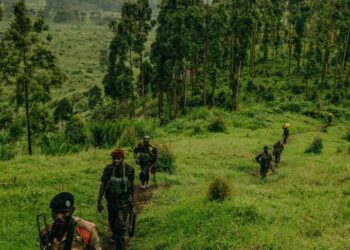
The ongoing conflict in the eastern Democratic Republic of the Congo (DRC) continues to reshape the security landscape across South Kivu and North Kivu provinces. In recent months, reports from local residents, community leaders, and other sources closely monitoring military developments have consistently indicated that the MRDP-Twirwaneho movement and the Alliance Fleuve Congo (AFC/M23) coalition are continuing to expand the territories they reportedly control.
Information received by Minembwe Capital News indicates that, following reports that MRDP-Twirwaneho had taken control of areas including Minembwe, Mikenke, Rwitsankuku, Point Zero, Gipupu, and Kwa Mulima, the group is now also reportedly extending its presence into additional parts of the Lulenge Sector, including Kabanju, Gitumba, Sara, and several surrounding localities.
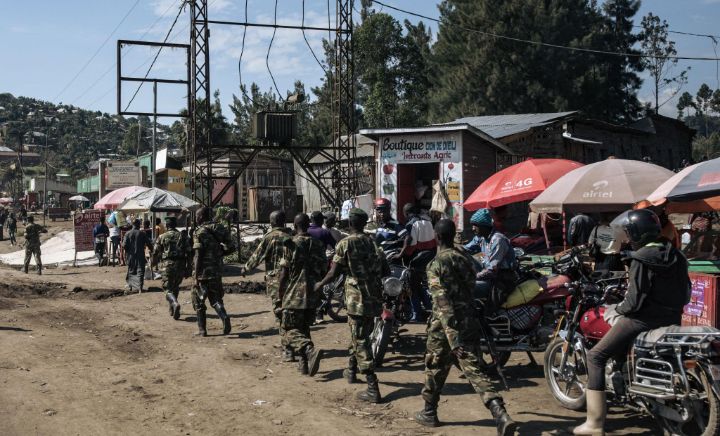
As these reports continue to circulate, the coalition of Congolese government forces—comprising the Armed Forces of the Democratic Republic of the Congo (FARDC), the Burundian National Defence Force (BNDF), Wazalendo militias, and fighters whom some parties accuse of belonging to the Democratic Forces for the Liberation of Rwanda (FDLR)—has also been reported to be retreating from certain areas. However, the FARDC has not officially commented on the current military situation in those locations.
In 2022, Burundi and the Democratic Republic of the Congo signed a bilateral security cooperation agreement. Initially, Burundian troops were deployed to South Kivu with the stated objective of combating Burundian armed groups, including RED-Tabara, FOREBU, and FNL-Nzabampema, which were believed to be operating from bases in eastern DRC.
In 2023, the agreement was extended, and Burundian forces were subsequently deployed to North Kivu to support the FARDC in its military campaign against AFC/M23, which had significantly expanded the areas under its control.
At the time, the Congolese government maintained that Burundi’s military support was essential to counter armed groups and restore state authority in territories that had fallen under rebel control.
Although Burundian troops were officially deployed to assist the Congolese government, their operations have remained the subject of ongoing controversy.
Some local residents and several human rights organizations have alleged that certain Burundian soldiers failed to protect civilians in areas affected by attacks. Additional allegations have claimed that Burundian forces cooperated with FDLR fighters and Wazalendo militias in certain operations. The Burundian government has consistently denied these accusations.
In an interview with BBC Gahuza published on 31 July 2026, Burundian President Évariste Ndayishimiye stated that Burundian troops deployed in the DRC operate under the command of the FARDC and that decisions regarding their deployment and operational activities are made by the Congolese authorities.
He said:
“Our troops were deployed to assist the Congolese government, and they operate under Congolese command. You cannot ask me how they are being used because those decisions are made by the Congolese authorities.”
President Ndayishimiye further compared this arrangement to the command structure of troops serving under United Nations or African Union peacekeeping missions, where the contributing country does not direct day-to-day military operations.
More than four years after Burundian troops were first deployed to the DRC, the fighting has not subsided. Instead, reports from the battlefield continue to indicate that MRDP-Twirwaneho and AFC/M23 are reportedly advancing into additional areas.
These developments have prompted some analysts to question whether Burundi’s military intervention has achieved its intended objectives. Some argue that, rather than restoring stability, the conflict has continued to intensify, further deepening concerns among local communities.
For its part, the Burundian government continues to maintain that its forces remain in the DRC at the invitation of the Congolese government and that their mission is to assist in combating armed groups threatening regional security.
Military analysts warn that, if ongoing battlefield reports are confirmed, the evolving situation could have significant implications for the security dynamics of the territories of Fizi, Mwenga, and Walungu.
Nevertheless, independently verifying the exact territorial control of the various parties remains extremely difficult due to security constraints and the lack of access to many active conflict zones.
As all sides continue to exchange accusations and present differing accounts of developments on the battlefield, it is the civilian population in eastern DRC that continues to bear the heaviest burden of the conflict. Thousands of people remain displaced, commercial activities have been severely disrupted, and access to healthcare and education continues to deteriorate, while political solutions remain elusive.
Many analysts agree that lasting peace cannot be achieved through military action alone. Instead, they argue that meaningful and inclusive political dialogue aimed at rebuilding trust among all parties involved is essential to bringing an end to a conflict that has devastated the lives of civilians in eastern Democratic Republic of the Congo for many years.