

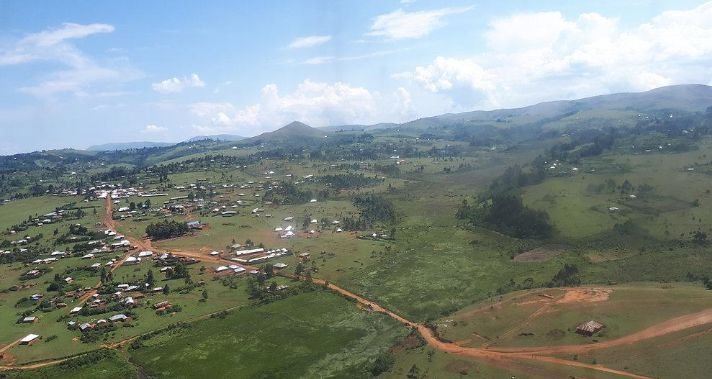
Minembwe in the Grip of a Deepening Hunger Crisis: Kabare Delivers a Strong Message to the UN
Minembwe Capital News (MCN)
Girinka Kabare William, an analyst who follows developments in eastern Democratic Republic of the Congo (DRC), believes that the prolonged hunger crisis affecting residents of the Minembwe highlands is linked to a history of marginalization, barriers to market access, and what he describes as deliberate efforts to deny local communities access to food supplies. He has called for the issue to be brought before the United Nations Security Council for consideration.
In a message addressed to the United Nations Security Council (UNSC), Girinka Kabare William, an analyst of the Great Lakes region, raised serious concerns about the hunger crisis affecting the Banyamulenge and other communities living in the Minembwe highlands, in South Kivu Province, Democratic Republic of the Congo (DRC).
He made these remarks during an interview with Minembwe Capital News (MCN) on the morning of Wednesday, 11 November 2026, explaining why he believes the humanitarian situation in Minembwe deserves the attention of the international community, particularly institutions mandated to safeguard international peace and security.
Girinka Kabare William argued that the hunger crisis in Minembwe should not be viewed merely as a consequence of food shortages. In his assessment, it is rooted in a long history of marginalization and discrimination that he says successive governments in the DRC have imposed on the local population.
He stated that, in his view, discrimination against the Banyamulenge is connected to broader hostility towards the Tutsi ethnic group. He argued that this has contributed to Minembwe’s longstanding lack of essential infrastructure, including roads connecting its communities to other areas.
He further explained that the roots of the problem can be traced back to the colonial era and that the situation has persisted under successive administrations in Kinshasa. As a result, he said, Minembwe continues to face serious challenges in transportation and trade with surrounding areas.
The Impact of Insecurity on Agriculture and Trade
Girinka Kabare William went on to explain that the situation deteriorated further when Mai-Mai armed groups, allegedly acting in cooperation with the Armed Forces of the Democratic Republic of the Congo (FARDC) and their partners, including Burundian forces, began seizing cattle belonging to the Banyamulenge. According to him, these actions left many families without their primary source of wealth and livelihood.
He said these alleged activities had devastating consequences for local livelihoods, leaving many residents unable to produce or secure enough food for their families. At the same time, routes traditionally used to access markets and purchase essential goods in neighbouring areas were increasingly closed or obstructed.
He further alleged that the administration of President Félix Tshisekedi, in cooperation with the government of Burundi, had closed routes that previously facilitated the transportation of food and other essential supplies into the Minembwe highlands.
The analyst believes these challenges are connected to discrimination and what he describes as genocidal ideology propagated by the Democratic Forces for the Liberation of Rwanda (FDLR), which he accuses of cooperating with Wazalendo armed groups. He argued that these developments have contributed to growing hostility towards the Banyamulenge and Tutsi communities more broadly in eastern DRC.
Emphasizing the gravity of the situation, Girinka Kabare William stated:
“A Tutsi person in eastern Congo has become a target for experimentation with killing. Those who are not killed by bullets will be killed by hunger.”
A Decade of Self-Reliance Amid a Worsening Hunger Crisis
Girinka Kabare William said the Banyamulenge have spent approximately ten years struggling to secure basic necessities for their daily lives, including food, medicine, fuel, and other essential supplies.
He noted that although residents had previously made efforts to become self-sufficient, they are now facing another major challenge linked to climatic conditions, particularly prolonged sunshine and drought, which continue to undermine agricultural activities.
He explained that the agricultural season has been severely affected, preventing residents from cultivating their fields adequately, at a time when hunger was already a serious problem in the region.
Another issue he highlighted concerns the food reserves stored by local households. He alleged that food stocks accumulated by residents were looted by Congolese forces, allegedly in cooperation with Burundian troops, while other remaining supplies were destroyed in fires set by those forces.
According to him, these incidents further deprived many families of the food reserves they had carefully stored to sustain them during periods of poor harvests and food shortages.
Food Prices Reach Extraordinary Levels
To illustrate the severity of the crisis, Girinka Kabare William cited food prices that he says are currently being reported in markets across Minembwe. He stated that one kilogram of salt can cost as much as US$50, while one kilogram of sugar can reach US$60.
He argued that these prices reflect the severity of transportation challenges and food shortages in the area, describing them as extraordinary compared with prices normally observed in other parts of the world.
He added that while one kilogram of salt may cost approximately half a US dollar in other locations, residents of Minembwe face dramatically higher prices because of the difficulties involved in transporting goods into the region.
Calls for the UN Security Council to Examine the Crisis
In his message, Girinka Kabare William said the hunger crisis in Minembwe requires urgent assistance from international organizations, particularly institutions responsible for protecting civilians and preventing actions that could place their lives at risk.
He expressed disappointment that, while residents continue to face severe hunger and shortages of basic necessities, he believes the international community has not done enough to address the situation.
In his assessment, apart from God and the Front pour la Refondation de la Nation (FRN), the Banyamulenge have no other meaningful source of support on which they can rely during these difficult circumstances.
It is against this background that he called on the United Nations Security Council to examine the hunger crisis, food shortages, and restrictions affecting access to Minembwe, with a view to identifying concrete measures to protect the civilian population.
He Accuses the DRC and Burundi of Contributing to the Plight of the Banyamulenge
Concluding his message, Girinka Kabare William said he believes the actions he describes as being directed against the Banyamulenge form part of a broader plan aimed at their extermination. He accused the governments of the DRC and Burundi of contributing to the circumstances facing the community.
He argued that developments in the region should no longer be allowed to pass without scrutiny and called for greater attention from international institutions, with the aim of protecting civilian lives and upholding human rights.
He concluded by stressing that the Banyamulenge would continue bringing their concerns to the attention of national leaders and international institutions, while maintaining their determination to defend themselves if their lives continued to be threatened.
He stated:
“We will continue to raise our voices and appeal to those in positions of power. However, we will never abandon our right to defend ourselves, because protecting human life is the responsibility of every person living on this planet. The Banyamulenge do not live on Mars; they are human beings too.”
He further maintained that what the Banyamulenge are experiencing is visible to the international community, but expressed frustration over what he described as the world’s silence in the face of the challenges confronting the population.
Minembwe Capital News (MCN)