

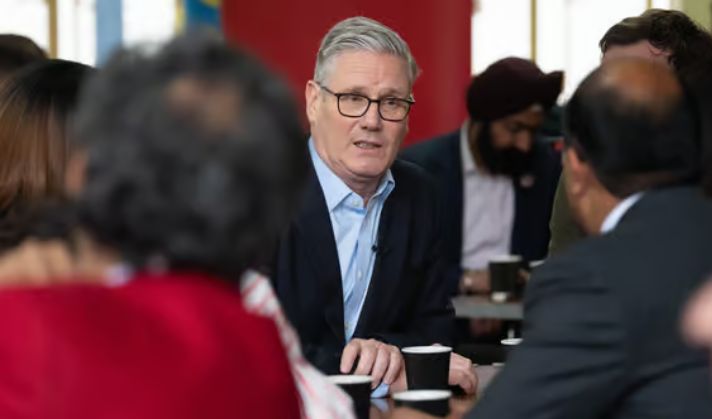
The United Kingdom in Political Turmoil: Keir Starmer Under Pressure to Resign Amid Growing National Challenges
UK Prime Minister Keir Starmer is facing a major political crisis after several members of his government and lawmakers from the Labour Party began calling for his resignation, accusing him of failing to lead the country effectively and deliver the reforms he had promised to the public.
Within less than 48 hours, four ministers announced their resignations, a development widely viewed as a clear sign of deep divisions and internal disagreements within Starmer’s government.
Those who resigned include:
Jess Phillips, Minister for Safeguarding and Violence Against Women and Girls;
Alex Davies-Jones, Minister for Victims;
Miatta Fahnbulleh, Minister for Housing and Urban Development;
Zubir Ahmed, Minister for Health.
In their resignation letters, the ministers collectively stated that many British citizens had lost confidence in Keir Starmer and his administration.
They said:
“It is evident that, in recent days, people across the United Kingdom have lost confidence in the Prime Minister.”
They also argued that Starmer had failed to deliver the change the country had hoped for after years of political and economic difficulties.
Starmer’s problems are not limited to his government alone, as serious divisions have also emerged within the Labour Party itself.
More than 80 Members of Parliament have reportedly signed a letter calling for his resignation, claiming that he has failed to provide the new direction the country expected following years of rapidly changing leadership.
However, more than 100 other MPs have continued to support Starmer, arguing that more time is needed for his policies and reforms to produce results.
Labour Party figure Anna Turley stated that despite the current political tensions, unity and cooperation remain more important than internal conflict.
She said:
“I support him as he continues implementing plans aimed at restoring public confidence and creating new opportunities for the country.”
Despite mounting pressure, Keir Starmer has insisted that he has no intention of resigning.
During a meeting with ministers, he reportedly stated that he would not step down because of pressure from certain politicians, emphasizing that he remains committed to fulfilling his responsibilities.
Starmer became Prime Minister in 2024 following a major electoral victory for the Labour Party after many years in opposition.
At the time, many citizens hoped he would restore political stability and address key national challenges, including economic difficulties, the rising cost of living, immigration concerns, and reforms within public services.
However, as the months passed, critics began accusing him of moving too slowly and failing to make decisive political decisions.
British politics is internationally recognized for its long-standing democratic traditions and governance based on strong institutions and the rule of law.
The United Kingdom operates under a constitutional monarchy, where the King or Queen serves as a symbol of national unity, while day-to-day governance is carried out by the Prime Minister and Parliament.
Historically, Britain became one of the world’s most influential powers in colonialism, trade, and global economics. The country also played a significant role in shaping modern democracy and international law.
In recent years, however, British politics has been marked by considerable political instability, especially following Brexit — the United Kingdom’s decision to leave the European Union.
Brexit created deep political divisions and also had major effects on the economy, trade, and the livelihoods of citizens.
Although the UK remains a strong democracy, several challenges within its political system continue to attract criticism, including:
- Frequent Leadership Changes
In recent years, the United Kingdom has seen several leaders come and go within a short period of time, raising concerns about the lack of long-term political stability.
- Economic Challenges
Many citizens continue to criticize the rising cost of living, housing difficulties, and unemployment, particularly among young people.
- Immigration Issues
Immigration policies have continued to spark heated debate, with some critics accusing the government of lacking a clear and consistent strategy.
- Declining Public Trust in Politicians
Numerous studies have shown that many citizens are increasingly losing trust in politicians, accusing them of making promises without delivering meaningful action.
Despite these challenges, the United Kingdom is still widely regarded as a country with strong and respected institutions.
- Strong Democracy
Elections, press freedom, and human rights continue to be upheld at a high standard.
- Powerful Institutions
Parliament, the judiciary, and the media operate independently, helping to ensure accountability within government.
- Strong Economy
Despite ongoing economic pressures, the United Kingdom remains one of the world’s leading economies, with London continuing to serve as one of the most important global financial centers.
- Diplomacy and International Influence
The country continues to play a major role in international politics and organizations such as NATO and the Commonwealth.
As political tensions continue to rise, King Charles III is expected to address Parliament on Wednesday.
Political analysts believe the speech could help ease internal tensions and restore public confidence.
However, concerns remain that if divisions within Starmer’s government are not resolved quickly, the Labour Party could face deeper fragmentation, potentially creating serious consequences for the future governance of the United Kingdom.