
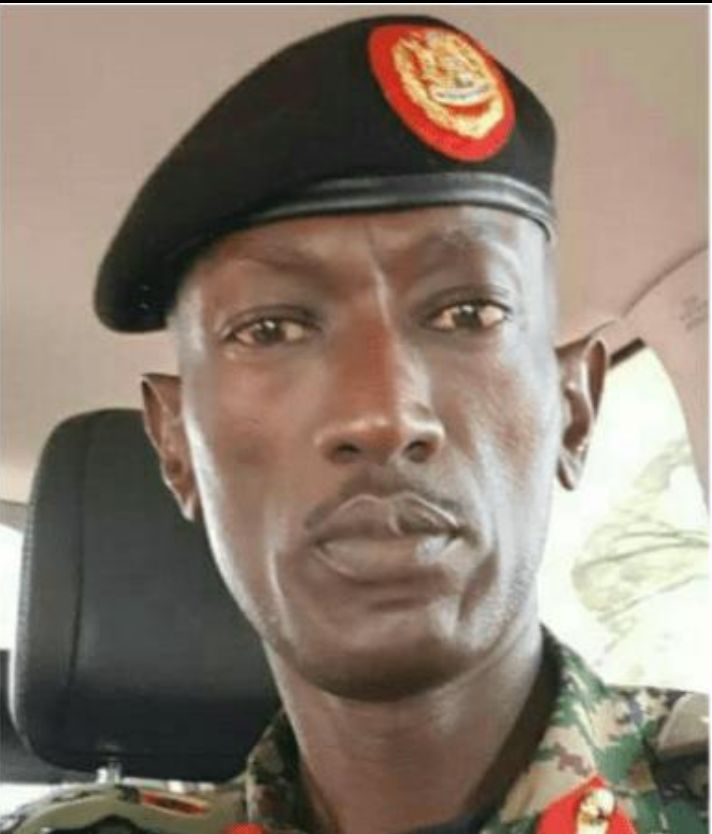
Uganda: Arrests of Former CMI Chiefs Bring Military Intelligence Back Into the Spotlight of the Country’s History
Minembwe Capital News (MCN)
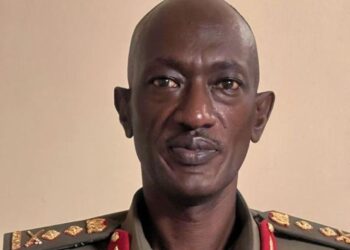
The arrests of Maj Gen Abel Kandiho and Brig Gen Charles Bakahumura, both former heads of Uganda’s military intelligence agency, have brought the issue of the powers of intelligence institutions, their history, and their role in Uganda’s governance and national security back to the centre of political and security discussions.
On Wednesday, 09/09/2026, Ugandan media reported that Maj Gen Abel Kandiho and Brig Gen Charles Bakahumura had been arrested by security authorities.
New Vision reported that the two officers were among 19 senior military officers who had served for a long time in the Uganda People’s Defence Forces (UPDF) and were officially retired on 20/08/2026, during a ceremony presided over by Uganda’s Commander-in-Chief, President Yoweri Kaguta Museveni.
According to media reports, their arrests are linked to investigations into alleged offences including treason and other crimes related to national security.
However, detailed information regarding the specific allegations against each of them, the evidence on which the investigations may be based, and where the two are being detained has not yet been fully disclosed.
Kandiho Arrested at His Farm
Reports indicate that Maj Gen Abel Kandiho was arrested at his farm in Gomba District.
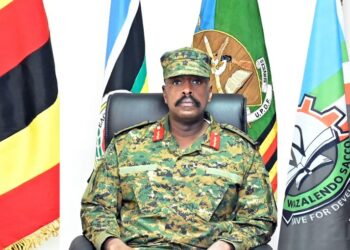
The development comes after remarks by Uganda’s Chief of Defence Forces, Gen Muhoozi Kainerugaba, who said that some former senior military officers who had attended the retirement ceremony were later seen dancing, and that some of them were supposed to be searched for.
Muhoozi said one of the officers had gone into hiding at his farm in Gomba and was allegedly attempting to escape to Rwanda. He said, however, that security authorities would search for him wherever he might be.
He also said that some others could be hiding at the home of Gen Salim Saleh, President Museveni’s brother.
Later, Gen Muhoozi announced that one of the generals had been arrested and said that another one would also be apprehended.
A report published by Pulse Uganda linked those remarks to the arrests of Kandiho and Bakahumura on 09/09/2026.
Abel Kandiho and His Prominent History in CMI
Maj Gen Abel Kandiho is not an ordinary name in the history of Uganda’s security institutions. He rose through various positions in the military, particularly in military intelligence and investigative operations, before eventually becoming head of the Chieftaincy of Military Intelligence (CMI).
CMI, an institution widely known for collecting and analysing military security-related intelligence, is now known as Defence Intelligence and Security (DIS).
Kandiho headed CMI from early 2017, at a time when Uganda was experiencing significant internal security challenges characterised by investigations into terrorism, urban killings, tensions between security institutions, and a highly charged political environment.
Before becoming head of CMI, Kandiho had already played a role in intelligence operations that brought him considerable prominence.
One notable example was the investigation into the 2010 bombings in Kampala. Daily Monitor previously reported that Kandiho, who at the time was CMI’s deputy head of operations, played a role in tracing information originating from a SIM card linked to a bomb that exploded in Makindye.
The subsequent investigation contributed to the arrest of individuals suspected of involvement in the attacks.
These operations further strengthened Kandiho’s reputation as one of the military officers with extensive experience in intelligence operations and in tracking networks of individuals suspected of involvement in terrorism.
Bakahumura Also Led CMI
Brig Gen Charles Bakahumura is also among the military officers who played an important role in the history of CMI.
He headed CMI from 2012 to 2017, before being replaced by Kandiho. He later became responsible for logistics and engineering in the Ugandan military and subsequently served as Uganda’s military attaché in Turkey.
The arrests of two individuals who headed the institution at different periods therefore place a much broader issue at the centre of public discussion—one that goes beyond the arrest of two military officers and concerns the history, structure, and authority of Uganda’s military intelligence establishment.
The History of Intelligence in Uganda: From Obote to CMI
To understand the significance of CMI and other intelligence institutions in Uganda, it is important to look back at the country’s history.
Since gaining independence on 09/10/1962, Uganda has gone through periods of political turmoil, military coups, military rule, and armed conflicts.
Throughout this history, intelligence institutions have been given a particularly important role, as successive governments have used them to monitor individuals suspected of threatening the authorities, combat armed groups, and protect the state itself.
Historical studies of Uganda’s intelligence institutions indicate that one of the country’s early significant intelligence bodies was the General Service Unit (GSU), established during Milton Obote’s rule, particularly to counter threats to the government emerging from the police or military.
The Idi Amin Era: Intelligence Becomes a Powerful Instrument of Government
In 1971, Idi Amin seized power after overthrowing Milton Obote.
From that point onward, security and intelligence institutions played a major role in the governance of the country.
During Amin’s rule, institutions including the State Research Bureau (SRB) and the Public Safety Unit (PSU) were established or strengthened to monitor individuals suspected of being enemies of the government.
Historical research into Uganda’s intelligence system indicates that these institutions were used to monitor political opponents, while Amin’s era was marked by widespread disappearances, arrests, and killings of people suspected of opposing his government.
This history is significant because it illustrates why intelligence eventually became one of the key pillars of Uganda’s national security system.
After Amin: Uganda Rebuilds Its Intelligence Institutions
Following the overthrow of Idi Amin in 1979, Uganda once again went through periods of political instability and armed conflict.
Milton Obote returned to power, but his government also faced armed insurgencies, including the movement led by Yoweri Museveni.
During this period, intelligence became an important instrument for monitoring rebel groups and tracking the activities of political opponents.
In 1986, Museveni and his National Resistance Army (NRA) seized power in Kampala.
From that point, Uganda began rebuilding its security and intelligence institutions in a new framework.
In 1987, the Internal Security Organisation (ISO) and External Security Organisation (ESO) were established by law. The legislation gave these institutions responsibility for collecting, receiving, processing, and analysing information related to the country’s internal and external security, as well as providing intelligence to the President and other authorised authorities.
ESO focuses primarily on threats originating outside Uganda, while ISO focuses mainly on internal security.
CMI, meanwhile, has retained its distinct role as a military institution responsible for intelligence and security matters concerning the UPDF.
CMI and Security in the Great Lakes Region
Over the years, CMI’s activities have not been limited to Uganda’s internal security concerns.
Uganda has played a significant role in security matters across the Great Lakes region, particularly in South Sudan, the Democratic Republic of Congo, Somalia, and along the country’s borders.
This has given military intelligence an important role in identifying the activities of armed groups, tracking networks of individuals, assessing external threats, and supporting the military in making operational decisions.
It is in this broader context of East African security that the history of CMI should be understood.
Kandiho, Rwanda and the History of Regional Intelligence
The name of Abel Kandiho has been closely associated with security tensions between Uganda and Rwanda in previous years.
At a time when relations between Kampala and Kigali had deteriorated significantly, the security and intelligence agencies of both countries accused each other of various activities involving espionage, arrests, and destabilisation.
This made CMI one of the most closely watched institutions in the region’s security landscape.
However, allegations reported at different times should not be treated as evidence of criminal wrongdoing unless they are established by competent authorities.
Kandiho himself became one of the most prominent security officials during that period and was later subjected to sanctions by the United States over allegations relating to human rights abuses.
These developments contributed to his continued prominence in regional security discussions.
Why Do the Arrests of Former CMI Chiefs Matter?
The arrests of Kandiho and Bakahumura carry significance beyond the fact that they are senior military officers who had recently retired.
Both have extensive knowledge of Uganda’s military intelligence structures, including how intelligence is collected, analysed, and used in national security decision-making.
Bakahumura headed CMI for five years, from 2012 to 2017.
Kandiho subsequently led the institution and became one of Uganda’s most prominent military intelligence chiefs during a period marked by security tensions and strained relations between Uganda and some countries in the region.
For this reason, the key question now is not simply whether they were arrested, but what exactly they are accused of, what evidence exists, which security institution carried out the arrests, and how the investigations will proceed.
The Major Questions Ahead
So far, reports from Ugandan media indicate that the two men were arrested as investigations into security-related offences continue.
However, detailed information regarding the allegations against them has not yet been fully disclosed.
This leaves several important questions awaiting answers:
- What exactly are Kandiho and Bakahumura being investigated for?
- Are the allegations connected to their activities after retirement, or to matters dating back to their time in office?
- Which security institution is conducting the investigation?
- Will they be brought before a court, or will other security measures be taken first?
- Could their arrests have further consequences for other senior former security officials?
The answers to these questions could provide an indication of the direction Uganda’s security and intelligence institutions may take in the future.
Conclusion
The arrests of Maj Gen Abel Kandiho and Brig Gen Charles Bakahumura represent a significant development in Uganda’s security landscape.
Both officers have long and distinguished histories within the country’s military intelligence establishment, and both served as heads of CMI at different periods.
Their arrest following retirement from the military could mark the beginning of a new chapter in the history of Uganda’s intelligence institutions.
However, until competent authorities officially disclose the charges or substantive evidence against them, their arrests should not be interpreted as proof that they have committed or been convicted of any offence.
The immediate focus will be on how the investigations unfold, whether the two men will be brought before the courts, and what explanation the Ugandan government will provide regarding the precise reasons behind their arrests.
At the regional level, where Uganda has played a significant role in security and intelligence operations for decades, developments involving the two former generals are likely to remain under close observation by security analysts, particularly because of their history within CMI and their extensive experience in military intelligence operations.