
More Than Ten Areas Reportedly Captured by MRDP-Twirwaneho After Driving Out FARDC, P5, FDLR, Wazalendo, and Burundian Forces from the Highlands of Fizi and Mwenga
The MRDP-Twirwaneho movement, which works closely with the Alliance Fleuve Congo (AFC/M23) coalition, says it has captured and established control over more than ten strategic areas in the highlands of Fizi and Mwenga territories following intense fighting that lasted for more than two weeks.
Information gathered by Minembwe Capital News indicates that the clashes took place mainly in the mountainous areas, where both sides engaged in sustained and heavy combat. According to MRDP-Twirwaneho spokespersons, following the fighting, the coalition of the Armed Forces of the Democratic Republic of the Congo (FARDC), together with Burundian troops, Wazalendo militias, the P5 group led by Kayumba Nyamwasa, Imbonerakure, and the Democratic Forces for the Liberation of Rwanda (FDLR), reportedly withdrew from several positions, including Mulima, Rusuku, Bibogobogo, and Kilumbi.
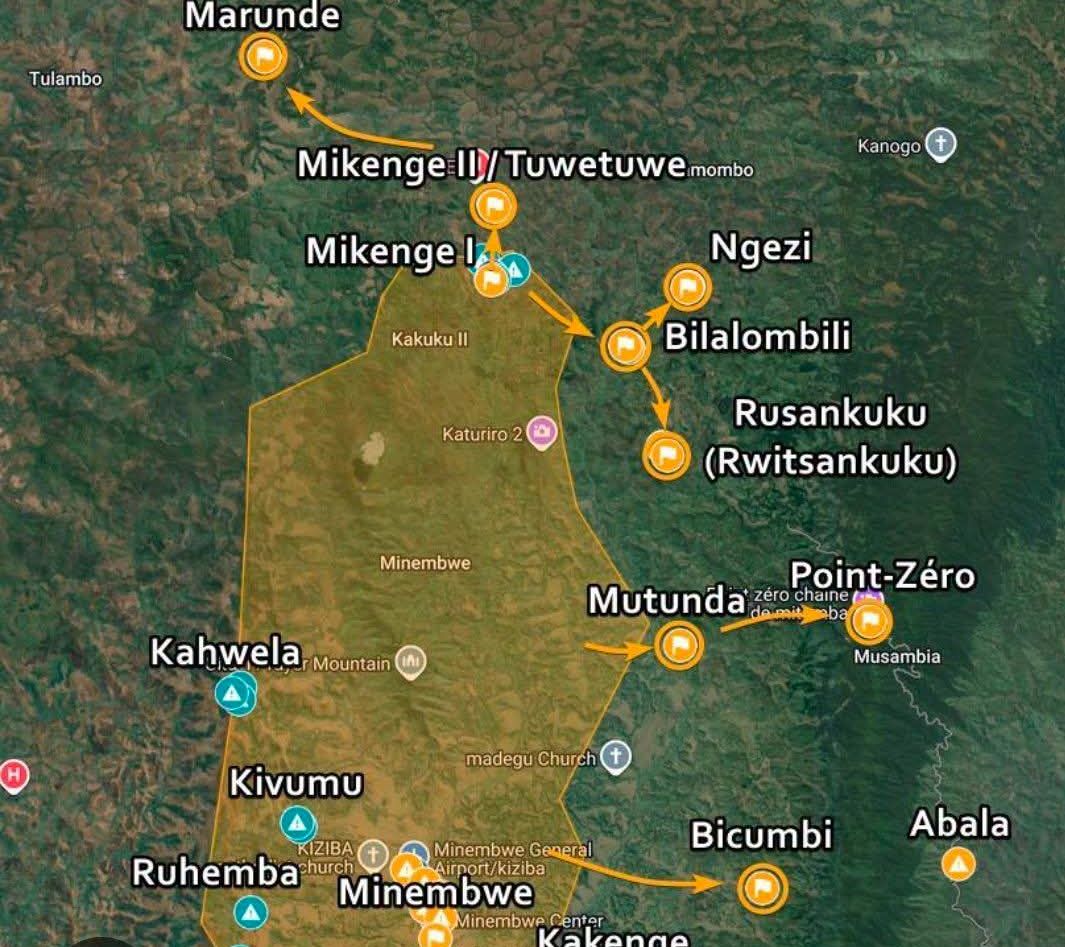
According to MRDP-Twirwaneho, the areas now under its control include Kalingi, Mikenge, Gitavi, Lundu, Kalonge, Gakenge, Lubemba, Bicumbi, Rwitsankuku, Ngezi, Murusirita, Mutunda, Muruta, and Point Zero. Point Zero is regarded as one of the most strategically important military positions because it overlooks and controls several key routes linking Fizi, Mwenga, and Minembwe.
Military analysts describe Point Zero as one of the most significant strategic positions in the highlands of South Kivu. Whoever controls the area is considered to have a significant operational advantage, with the ability to monitor and influence military activities across a wide surrounding region. This strategic importance explains why both sides have fiercely contested the position.
Meanwhile, information from local residents indicates that following the territorial gains claimed by MRDP-Twirwaneho, FARDC and its allied forces have reportedly redeployed to Mulima, Bibogobogo, Rusuku, Abala, Nakiele, and Mukera, where they are said to be regrouping and reinforcing their positions in preparation for possible future operations.
Observers closely monitoring developments in South Kivu believe that the reported capture of Point Zero could provide MRDP-Twirwaneho with an opportunity to expand its operations into other parts of Fizi Territory. Some analysts argue that controlling the area could also open a route toward the town of Baraka while increasing pressure on strategic corridors leading into Tanganyika Province, including the city of Kalemie.
Further analysis suggests that the evolving military situation in Fizi and Mwenga resembles patterns previously observed in other parts of eastern Democratic Republic of the Congo, where armed groups first secured control of surrounding rural areas before attempting to isolate or encircle major military positions.