
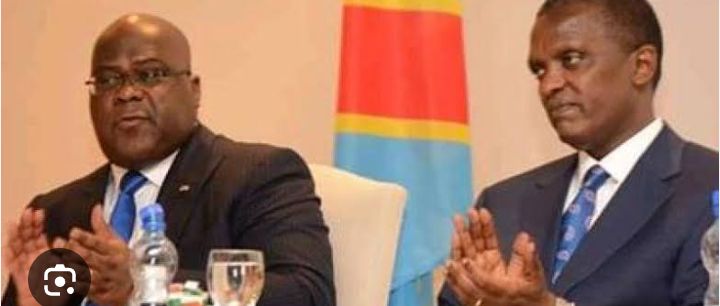
Prominent Congolese Politician Azarias Ruberwa Calls for Justice and National Reconciliation, Criticizes Tshisekedi’s Handling of the Eastern DRC Crisis
Minembwe Capital News
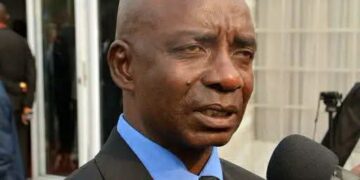
Former Vice President of the Democratic Republic of Congo (DRC), Azarias Ruberwa, has stated that the country continues to face a profound political and security crisis, warning that the approach adopted by President Félix Tshisekedi’s administration risks deepening divisions rather than resolving the nation’s longstanding conflicts.
In an extensive interview with the media, Ruberwa addressed a wide range of issues, including the security situation in eastern DRC, constitutional matters, the death sentence handed down in absentia against former President Joseph Kabila, and the persistent challenges affecting the Minembwe Highlands.
Ruberwa argued that the death sentence imposed on Joseph Kabila was inappropriate and inconsistent with the principles of justice, maintaining that the proceedings failed to meet acceptable legal standards. He stressed that, instead of intensifying political confrontation, the country should embrace dialogue and national reconciliation as the most effective path toward lasting peace.
He further emphasized that the DRC must strengthen independent institutions that uphold the rule of law rather than allowing the justice system to become a political instrument, warning that such practices could further undermine national unity.
Addressing the situation in the Minembwe Highlands, Ruberwa noted that local communities continue to endure the devastating consequences of armed conflict, repeated attacks, and a worsening humanitarian crisis. He expressed concern over the government’s reliance on military operations and cooperation with foreign armed forces in the region, arguing that greater priority should be given to protecting civilians and pursuing a political solution instead of prolonging armed confrontation.
He also called for an independent investigation into alleged crimes committed against civilians and urged all parties involved in the conflict to engage in meaningful peace negotiations aimed at achieving sustainable stability.
Regarding the country’s political future, Ruberwa warned that ongoing debates surrounding constitutional amendments and presidential term limits could further heighten political tensions. He reaffirmed that respect for the Constitution remains one of the fundamental pillars for safeguarding democracy and preserving national stability.
He added that many political leaders, including representatives from eastern communities such as Mulenge, continue to argue that both the security and political crises should be resolved through dialogue rather than through continued military action.
Meanwhile, as military operations continue in the Minembwe Highlands and other parts of Fizi and Mwenga territories, the MRDP-Twirwaneho movement maintains that it continues to control several areas after driving out a coalition composed of the Armed Forces of the Democratic Republic of Congo (FARDC), Burundian forces, Wazalendo militias, and the FDLR. The Congolese government, on the other hand, maintains that FARDC operations are ongoing to restore state authority in those areas. According to MRDP-Twirwaneho, the coalition was pushed out of Mikenke, Rwitsankuku, Point Zero, Mutunda, Bicumbi, Kwa Mulima, as well as other locations in the Minembwe Highlands, including Gakenke, Kalingi, Gitavi, Bidegu, Kalongi, and surrounding areas.
In conclusion, Azarias Ruberwa reiterated that the Democratic Republic of Congo urgently needs an inclusive national dialogue bringing together all stakeholders to address the country’s security challenges, governance issues, citizens’ rights, and long-term development.
He concluded that lasting peace cannot be achieved through military means alone, but must instead be built upon reconciliation, respect for the rule of law, and the restoration of trust between the population and state institutions. His remarks come at a time when the Democratic Republic of Congo continues to grapple with significant political and security challenges, particularly in the eastern part of the country.