
Analyst Girinka Warns the United States: “Do Not Equate AFC/M23 with FDLR; Mineral Interests Should Not Outweigh the Right to Life”
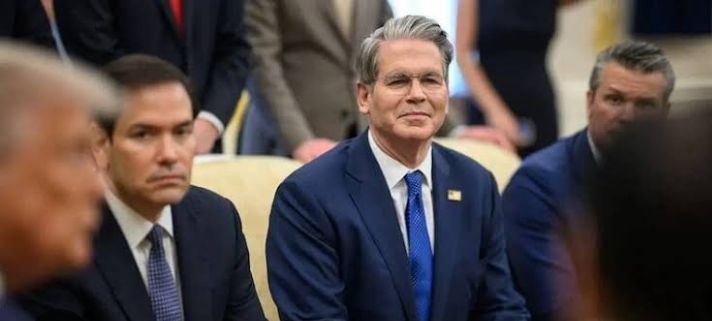
In a special message sent to Minembwe Capital News, renowned political and security analyst in eastern Democratic Republic of the Congo (DRC), Girinka William Kabare, strongly criticized recent remarks made by Scott Bessent, the United States Secretary of the Treasury, who stated that both AFC/M23 and the FDLR are among the groups threatening American interests in eastern Congo.
According to Girinka, these comments have been poorly received by many observers and analysts closely following security developments in the Great Lakes region, particularly in eastern DRC. He argued that the statement conflates two groups with fundamentally different histories, objectives, and contexts.
He stated:
“I have read and listened to reports released this week claiming that M23 and the FDLR are groups threatening American interests in eastern Congo. The question I ask is this: whose interests are being threatened? Can the value of human lives be compared to interests tied to mineral resources?”
The analyst expressed concern over what he described as an attempt to place the FDLR—a group that has for years been accused of involvement in ethnic violence and crimes linked to the aftermath of the 1994 Genocide against the Tutsi in Rwanda—on the same level as AFC/M23 and Twirwaneho, movements that claim to be fighting for the rights of communities they say have long been denied citizenship, subjected to discrimination, and displaced from their ancestral lands.
Girinka further argued that the plight of Congolese Tutsi communities in North Kivu and Banyamulenge communities in South Kivu has not received adequate international attention, despite persistent allegations of killings, looting, persecution, and property confiscation.
He said:
“Many people overlook the fact that there are communities that have spent nearly thirty years waiting to return to their homes. Some have lived as refugees since 1996, while others remain internally displaced or scattered across neighboring countries. No lasting solution has yet been found.”
Girinka also recalled that AFC/M23 previously withdrew its forces from certain areas, including the city of Uvira, following discussions held in Doha, Qatar.
According to him, this demonstrated the movement’s willingness to engage with international mediators in pursuit of political solutions.
He added:
“If the United States supported the Doha negotiations and the parties remain engaged in dialogue, it is difficult to understand how AFC/M23 can once again be placed in the same category as the FDLR.”
In his message, Girinka argued that the core issue is not AFC/M23 itself, but rather what he described as the inability of the Kinshasa government to adequately protect civilians in eastern Congo.
He noted that many communities continue to face insecurity, armed group activity, and recurring conflicts that have persisted for decades without a durable resolution.
He stated:
“When civilians are unsafe, killed, looted, or deprived of their rights, the first question that should be asked concerns the responsibility of the state. It is the government’s duty to protect its citizens.”
The analyst further emphasized that the international community should prioritize the protection of human life over economic interests and competition for access to mineral resources.
Concluding his message, Girinka called on the United States to reassess its understanding of the situation in eastern Congo.
He argued that the international community should adopt a broader perspective, seek to understand the reasons why some communities claim to have taken up arms, and support comprehensive dialogue aimed at achieving lasting peace.
He concluded:
“Sustainable security will not come from pursuing interests alone. It will come from respecting the rights of every citizen and addressing the root causes that have fueled conflict for decades. Human life must come before all other interests.”
Minembwe Capital News informs its readers that this message reflects the personal views and analysis of Girinka William Kabare, a commentator who closely follows political and security developments in eastern DRC. The opinions expressed in this statement are his own and are presented as a contribution to the ongoing debate and discussions surrounding security challenges in eastern Congo.