
Azarias Ruberwa Returns to the Media Spotlight, Addressing Minembwe’s Security Crisis and Calling for Peace
MINEMBWE CAPITAL NEWS
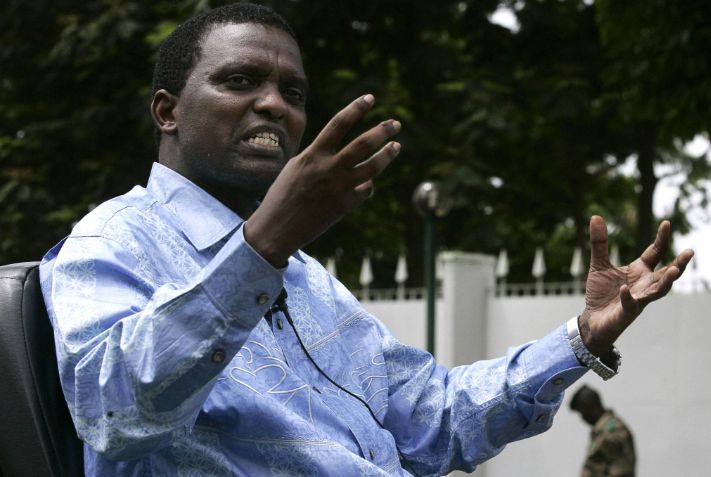
Former Vice President of the Democratic Republic of Congo, Azarias Ruberwa Manywa, has returned to the media spotlight, offering his assessment of the security situation and the humanitarian conditions facing civilians in eastern DRC, particularly in Minembwe and the Mulenge highlands of South Kivu Province.
Ruberwa, one of the prominent political figures who played a significant role in Congo’s post-war political history, appeared in an X Space hosted by journalist Stanis Bujakera Tshiamala, where he addressed the security crisis, the situation of civilians, ongoing peace efforts, political developments, and rhetoric surrounding the conflict in the Great Lakes region.
The discussion was framed around the war in eastern DRC, the Washington Agreement, the Doha talks, and the prospect of a national dialogue.
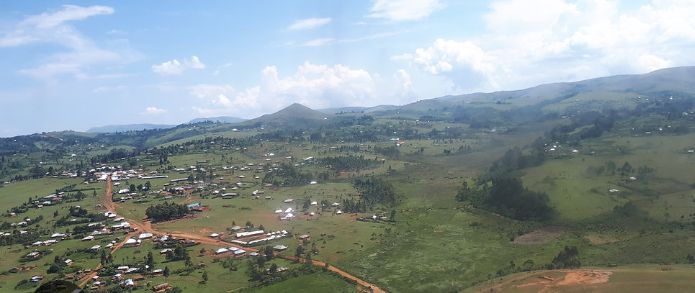
Ruberwa Addresses the Situation in Minembwe
During the discussion, Azarias Ruberwa expressed serious concern over what he described as the inadequate implementation of the ceasefire between the opposing sides.
He noted that residents of Minembwe had experienced nearly two months of relative calm, but that recent developments were raising concerns that the security situation could deteriorate again, including reports of drone attacks.
His remarks are consistent with positions he has expressed previously, in which he has argued that the security situation in Minembwe should not be viewed solely through the lens of military confrontation. Rather, it should also be approached from the perspective of civilian protection and addressing the underlying political and social issues that have contributed to instability in eastern Congo.
He Condemns the Impact of the War on Civilians
Ruberwa placed particular emphasis on the consequences of armed conflict for ordinary civilians, arguing that the security situation should not be assessed solely through military statements and battlefield figures while communities on the ground continue to endure serious hardship.
He pointed to the destruction of homes, schools, health facilities, livestock and other civilian assets, as well as the displacement of people forced to flee their homes.
Regarding Minembwe, he also highlighted the difficulties surrounding food supplies and restrictions on commercial activity, which he said have had serious consequences for the population.
The former Vice President called for independent investigations into all reported acts of violence in the area, arguing that the truth must be established and that those found responsible should be held accountable in accordance with the findings of credible investigations.
Concerns Over Military Cooperation
Another significant aspect of Ruberwa’s remarks concerned military cooperation between the Congolese and Burundian armed forces in eastern DRC.
He questioned how such military cooperation could contribute to lasting peace if, in his assessment, military operations continue to have consequences for civilian populations in conflict-affected areas.
Ruberwa also referred to other parts of eastern Congo, including Fizi, Baraka, Masisi and Walikale, emphasizing that the ceasefire should not be considered in isolation or applied selectively. According to him, all parties must respect the commitments they have made.
A Figure With Extensive Experience in Congo’s Political History
Azarias Ruberwa is no stranger to the political and security challenges facing the Democratic Republic of Congo.
He served as one of the country’s Vice Presidents in the 2003–2006 transitional government and later served as Minister of State in charge of Decentralization and Institutional Reform.
A lawyer by profession, Ruberwa also played a role in the Sun City peace process and in broader efforts aimed at rebuilding Congo’s state institutions following years of war.
His extensive experience in Congo’s political history continues to make his views on the country’s eastern security crisis a subject of significant public interest.
Although his positions have attracted disagreement on certain issues, Ruberwa remains one of the Congolese political figures with extensive experience in peace negotiations, governance, security and reconciliation.
Ruberwa Advocates Dialogue Over Continued Warfare
In his remarks, Ruberwa once again emphasized that war cannot provide a sustainable solution to Congo’s longstanding political and security crisis.
He urged the parties to choose dialogue and reconciliation rather than seeking victory exclusively on the battlefield.
Using the concept he described as “peace among men,” Ruberwa argued that no side should attempt to impose peace on another through military force, warning that such an approach risks perpetuating the cycle of conflict, displacement and humanitarian suffering.
His position is also consistent with views he has expressed at different times, emphasizing that peace and reconciliation cannot be indefinitely postponed and that issues involving division, poverty, insecurity and relations between communities must be addressed through a comprehensive approach.
His Message to Politicians: Words Should Build, Not Destroy
Another important element of Ruberwa’s return to the public debate was his emphasis on the need for greater responsibility and prudence in political discourse.
At a time when political debate in the DRC is often marked by strong accusations, confrontation between opposing camps and rhetoric capable of deepening divisions, Ruberwa’s message was that political leaders should avoid language that could further inflame tensions.
For a politician with decades of experience in political negotiations and peace processes, his position is that Congo needs leaders capable of looking beyond immediate political interests and addressing the realities confronting communities on the ground, rather than continuing to build political narratives around mutual blame.
Ruberwa Remains a Prominent Voice on the Banyamulenge Question
On the situation of the Banyamulenge, Ruberwa has continued to speak about their rights as Congolese citizens and the responsibility of the state to protect them, just as it is expected to protect all other citizens.
In an interview with the media in July 2026, he argued that the crisis in eastern Congo should not be viewed exclusively through the prism of war. He called instead for a broader national dialogue focused on security, governance, the protection of all citizens, addressing the roots of division, and promoting reconciliation.
His position gives added significance to his renewed appearance in the media at a time when the security situation in Minembwe and elsewhere in eastern DRC remains one of the country’s most pressing challenges.
A Return to the Public Debate at a Critical Moment
Azarias Ruberwa’s return to the media spotlight has once again placed the security situation in Minembwe and the wider conflict in eastern DRC at the center of public discussion.
Speaking with an emphasis on political experience, caution and dialogue, Ruberwa argued that the lives and safety of civilians should take precedence over military victory, while urging all parties to respect ceasefire commitments and pursue a political solution.
For many observers who have followed Congo’s political trajectory for years, Ruberwa’s renewed participation in the public debate could add weight to discussions surrounding the future of peace, reconciliation and governance in the Democratic Republic of Congo, particularly in the troubled eastern provinces.