
DRC: Congolese Diaspora Expresses Its Position on U.S. Sanctions Against Kabila
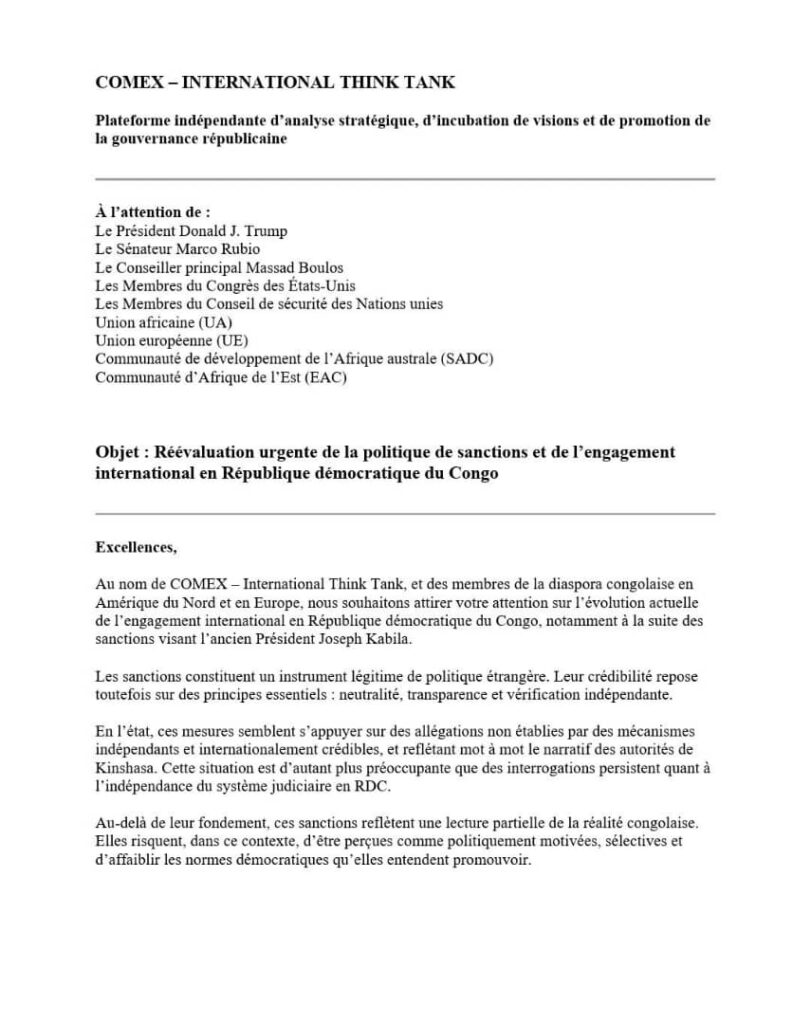
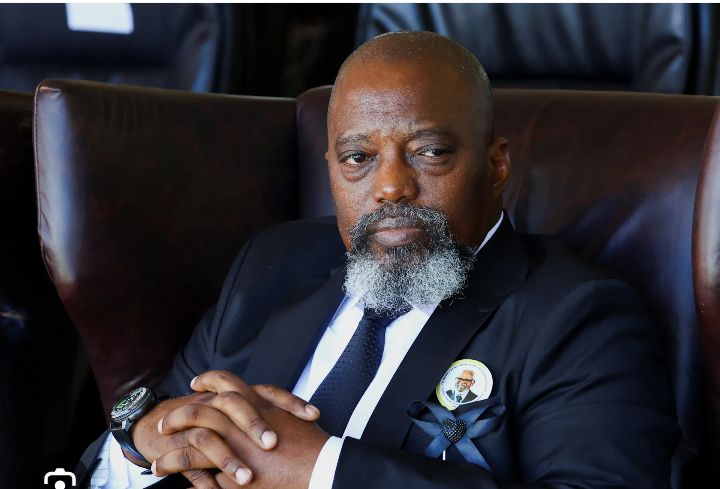
Congolese citizens living abroad (the diaspora) have begun to raise a strong voice, calling for a renewed assessment of the sanctions imposed on former President of the Democratic Republic of Congo, Joseph Kabila. They argue that these measures may have been taken on the basis of political considerations rather than on independent, concrete, and verifiable evidence.
This position was highlighted by a group of analysts known as the COMEX think tank, which submitted a strong memorandum to international authorities and institutions, including the United States government—particularly President Donald Trump and Secretary of State Marco Rubio—as well as international organizations such as the United Nations (UN), the African Union (AU), and the European Union (EU).
In the memorandum, COMEX emphasizes that the imposition of individual sanctions, such as those applied to Kabila, should be based on independent, clear, and verifiable evidence confirmed by impartial institutions. The think tank argues that in the absence of publicly available evidence, such sanctions risk being perceived as politically motivated rather than grounded in legal justice.
Members of the Congolese diaspora further stress that such sanctions may have serious implications for political freedom and for the trust citizens place in international institutions. They also call for a fair and transparent mechanism to review such decisions, including guaranteeing accused individuals the right to present their defense before competent authorities.
On the other hand, some international political analysts note that sanctions imposed by states or international organizations are often intended to pressure leaders suspected of undermining democracy, violating human rights, or engaging in the embezzlement of public funds. However, they also acknowledge that transparency and sufficient justification are essential to avoid perceptions of bias.
To date, no decision has been made by international institutions regarding the diaspora’s request and COMEX’s memorandum. The sanctions imposed on Joseph Kabila remain in effect under the authority of the United States.
Nevertheless, this memorandum could reignite international debate on how sanctions are determined and implemented, particularly regarding the need for clear evidence and adherence to the principle of justice for all.
Analysts suggest that without changes in how such matters are handled, tensions may continue to grow between supporters and opponents of these sanctions—potentially affecting political relations between the DRC and major global powers.
The Congolese diaspora’s appeal, along with the COMEX memorandum, once again raises a fundamental question about the role of sanctions in global governance: are they a tool of justice, or are they sometimes used as instruments of political influence? This issue is likely to remain a subject of intense debate in the coming days, as the boundaries between political interests and the principles of justice continue to be examined.