

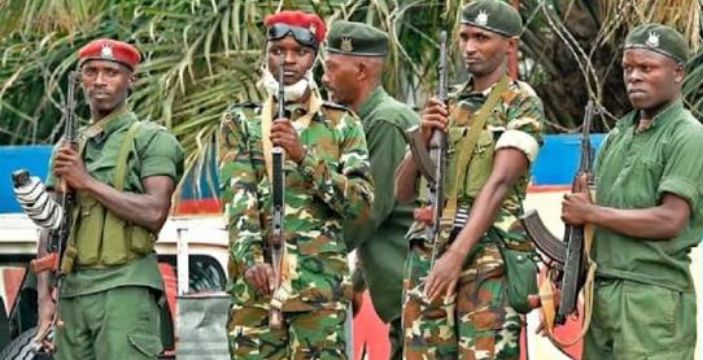
In-Depth Investigation into the History of Red-Tabara in the Mulenge Highlands: Its Arrival in South Kivu, Collaboration with Gumino, and Allegations of Attacks against the Banyamulenge
Over the past several years, the name Red-Tabara has become one of the most frequently mentioned armed groups in the security crises affecting eastern Democratic Republic of Congo, particularly in the highlands of Minembwe, Bijombo, Rurambo, and Fizi. Some view the movement as a rebellion originally created to fight the Burundian government, while others believe it gradually evolved into a tool of ethnic conflict and regional political interests.
However, information and testimonies gathered from individuals who closely witnessed these events and shared their accounts with Minembwe Capital News suggest that the history of Red-Tabara in Mulenge, South Kivu, differs significantly from the version commonly circulated. Many maintain that the group did not initially arrive in South Kivu with the intention of targeting the Banyamulenge, but that the situation evolved over time due to armed alliances, the actions of certain military leaders, and the geopolitical interests of regional states.
This investigation by Minembwe Capital News is notably based on the testimony of a person who closely witnessed these events and who personally knew several key figures of the period, including Shyaka Nyamusaraba, leader of the Gumino movement.
Following the attempted coup against Burundian President Pierre Nkurunziza in 2015, many Burundian soldiers fled the country. Some of them sought refuge in the Democratic Republic of Congo through different routes.
According to collected testimonies, these fighters entered Congo through two main corridors:
- Some crossed Lake Tanganyika before arriving in Kabembwe, in the Bibogobogo area of Fizi Territory;
- Others passed through the Rusizi Plain before reaching Kiryama, in the Rurambo area of Uvira Territory.
At that time, these fighters were not yet united under a single structure and did not operate under one common name. They simply shared the same reality: fleeing the regime in Bujumbura.
The group that arrived in Kabembwe already possessed significant military capacity, including numerous weapons, ammunition, and sufficient equipment. In contrast, those who reached Kiryama were fewer in number and lacked the means necessary to establish a large armed force.
According to information provided by this witness, the fighters were allegedly transported through corridors controlled by the FARDC, leading many people to believe that certain officials in Kinshasa may have been involved in facilitating their settlement.
Even before Red-Tabara established ties with Gumino, a man reportedly arrived in Kabembwe, Bibogobogo, to inform the fighters that Banyamulenge civilians were being massacred by Mai-Mai groups in Minembwe and surrounding areas.
Because several of these fighters were Tutsi, the reports are said to have deeply affected them. They then reportedly moved toward Bijabo, where Gumino’s headquarters, led by Shyaka Nyamusaraba, was located.
At that time, a large portion of the Banyamulenge population viewed these fighters as a force capable of helping them resist attacks from Mai-Mai groups, particularly:
- Mai-Mai Yakutumba;
- Biloze Bishambuke;
- as well as other armed groups that had long targeted Banyamulenge villages.
Red-Tabara reportedly spent nearly five months in Bijabo in close collaboration with Nyamusaraba’s Gumino movement.
However, despite this initial cooperation, the situation allegedly changed abruptly.
According to this testimony, Nyamusaraba reportedly received orders to expel Red-Tabara from Bijabo. The exact origin of these instructions remains unknown, though some sources claim that senior officers close to the Kinshasa government may have played a role in the decision.
Nyamusaraba was allegedly instructed to remove them without provoking direct confrontation. He is said to have advised Red-Tabara fighters to relocate to Kiryama, in the Rurambo area, where other members of their movement were already present.
The fighters reportedly accepted the proposal. However, according to the testimony, Nyamusaraba had secretly already coordinated an operation with the FARDC to launch an attack against them.
As Red-Tabara left Bijabo, the group reportedly arrived in the locality of Kane, in Ruhwehwe, within the Ndondo sector of the Bijombo grouping. The fighters allegedly spent the night there and slaughtered cattle purchased from Banyamulenge residents.
It was at that moment, according to the testimony, that Nyamusaraba contacted FARDC forces stationed at Tahiro, under the command of Major Mandevu, requesting them to launch an offensive against the fighters.
The FARDC reportedly immediately attacked Red-Tabara. The attackers also allegedly included elements of Gumino, reinforcing suspicions that Nyamusaraba was part of the plan.
According to the witness, at least one Red-Tabara fighter was killed during these clashes.
After arriving in Kiryama, Red-Tabara established itself there permanently. However, Nyamusaraba reportedly continued collaborating with Burundian authorities in an effort to obtain support against the movement.
It was within this context that Burundi allegedly deployed Imbonerakure members to Bijabo for the first time.
At the same time, fighters from Kayumba Nyamwasa’s P5 movement were also reportedly cooperating with Nyamusaraba.
According to the same source, in July 2017, forces from Gumino, P5, and the Imbonerakure allegedly launched a surprise nighttime attack against Red-Tabara in Kiryama.
The witness stated:
“I saw all of this with my own eyes. I do not want my identity revealed, but I know the facts I am describing perfectly.”
During the attack, Red-Tabara reportedly lost four senior officers, including fighters holding the ranks of major and captain.
Despite the surprise assault, Red-Tabara allegedly managed to reorganize and repel its attackers. The Imbonerakure reportedly returned to Burundi, while P5 and Gumino fighters withdrew back toward Bijabo.
Following the attack, Red-Tabara reportedly concluded that it had been betrayed by Nyamusaraba.
It was then, according to the testimony, that certain Mai-Mai leaders from the Bafulero and Banyindu communities began approaching Red-Tabara, claiming that the Banyamulenge were “traitors” because of actions attributed to Nyamusaraba.
This reportedly marked the beginning of Red-Tabara’s rapprochement with certain Mai-Mai groups.
Although this relationship did not immediately become a full alliance, the two sides reportedly grew progressively closer over time.
In Bijabo, Nyamusaraba later reportedly entered into conflict with P5 fighters. According to several sources, these tensions were linked to financial disputes involving funds sent from Europe and other countries.
Some P5 members accused Nyamusaraba of diverting money intended for the movement, despite the fact that the groups were separate entities.
This crisis reportedly led some P5 fighters, including Karemera, Gatera, and Kanyemera, to remain alongside Nyamusaraba, while others chose to join Red-Tabara in Kiryama.
Before leaving, some fighters reportedly violently assaulted one of their commanders, Kanyemera, who initially opposed the split from Gumino. He was allegedly tied to a tree before the group continued its journey.
After strengthening its ties with dissident P5 fighters and certain Mai-Mai groups, Red-Tabara reportedly began launching attacks against Gumino positions.
In 2018, the movement allegedly carried out major offensives in Murambya and Kanogo.
Many Banyamulenge civilians reportedly fled toward Mugeti, Kanyaga, Gahuna, and nearby forests.
According to this testimony:
- several houses were allegedly burned;
- cattle herds were reportedly looted;
- many families abandoned their property;
- and groups allied with Red-Tabara, Mai-Mai factions, and P5 allegedly continued attacks primarily targeting Banyamulenge civilians.
Subsequently, Red-Tabara reportedly collaborated with various armed groups and, at certain times, even with the FARDC in some military operations.
However, over time, relations between Red-Tabara and the FARDC reportedly deteriorated.
In 2022, Red-Tabara allegedly completely severed ties with the FARDC after discovering that the Congolese army was cooperating with the Burundian army in operations aimed at fighting the movement.
From that period onward:
- the FARDC;
- the Burundian army;
- Mai-Mai/Wazalendo groups;
reportedly began pursuing Red-Tabara, forcing the movement to retreat into the forests of Mwenga and Fizi.
Certain Mai-Mai groups that had previously collaborated with Red-Tabara also eventually distanced themselves from the movement, notably the faction led by Kibukila Mutetezi.
Did Red-Tabara Have a War Agenda against the Banyamulenge?
The interviewed witness insists that Red-Tabara did not initially intend to fight or target the Banyamulenge.
According to him:
- the movement arrived in Bijabo believing it was coming to protect threatened populations;
- but after what were described as betrayals by certain Gumino leaders;
- as well as under the influence of Mai-Mai groups harboring deep hostility;
the situation gradually changed.
He also added that some of the principal architects behind the rapprochement with Mai-Mai groups were P5 fighters who had broken away from Nyamusaraba.
Red-Tabara Today: Still an Active Force or a Weakened Movement?
The witness also stated that opinions today differ regarding Red-Tabara’s actual strength.
Some claim that the movement still maintains a number of fighters operating in the forests of South Kivu.
Others believe its capabilities have significantly weakened following the deaths of several important leaders, including Gisiga, while some fighters reportedly fled to countries such as Tanzania.
Regardless, the history of Red-Tabara remains one of the major chapters in the conflicts that have marked the Mulenge highlands, particularly in the regions of Minembwe, Bijombo, Rurambo, and Fizi.
The story of Red-Tabara in South Kivu illustrates how regional wars became intertwined with political interests, communal tensions, the involvement of neighboring states, and shifting alliances between armed groups.
It also demonstrates how a movement can arrive in a region with a specific objective, only to evolve over time under the influence of circumstances, alliances, betrayals, and military interests.
Although many unanswered questions still surround this history, testimonies from individuals who lived through these events continue to provide a different perspective on what truly happened in the highlands of Mulenge — realities that are rarely discussed publicly.