
“Infiltration” in the DRC: The Hidden Truth Behind a Political Pretext
At all times when the Democratic Republic of Congo (DRC) faces major challenges—whether insecurity, weak state institutions, or leadership that appears unable to resolve crises—one term is repeatedly invoked: “infiltration” (the penetration of state structures by hostile actors).
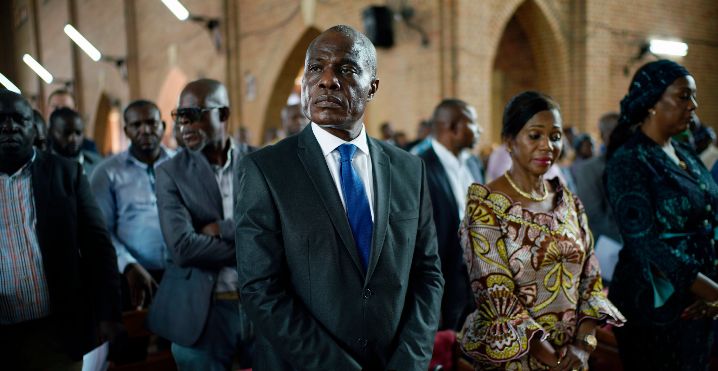
Recently, opposition politician Martin Fayulu once again used this term, arguing that the army is weakened, the security services have been infiltrated, and that citizens are left without protection. However, the real issue is not merely the use of the term itself, but the fact that it has come to be treated as a sufficient explanation for nearly all the country’s problems.
In Congolese political discourse, “infiltration” is no longer a claim that requires evidence; rather, it has become a catch-all explanation, as if it were a master key capable of unlocking every crisis. This tendency prevents deeper analysis of the true causes behind the state’s weaknesses.
When used without rigorous assessment, the term becomes a convenient cover, obscuring the responsibility of leaders and institutions. Even senior officials—including President Félix Tshisekedi and Prime Minister Judith Suminwa, as well as other politicians seeking visibility—often fall into the trap of relying on this narrative instead of engaging in substantive analysis.
There is no doubt that, in international relations, states can indeed be infiltrated by others through espionage or political and economic interests. No country is entirely immune to such dynamics. However, attributing all problems solely to “infiltration” ignores the multiple, concrete factors that require careful and nuanced consideration.
Is the DRC truly the only country in the world that must constantly suffer from such vulnerabilities without the capacity to prevent them? Do other nations possess some exceptional immunity? These assumptions lack foundation and instead reflect an evasion of responsibility.
The excessive use of this term also fuels division.
In reality, the DRC faces deep internal challenges that have been evident throughout its history, including:
entrenched corruption,
weak state institutions,
inadequate governance,
and political practices lacking clear direction.
These problems are rooted in the country’s history—from the period of Belgian colonial rule, through the authoritarian regime of Mobutu Sese Seko marked by repression and institutional decay, to the cycles of conflict that began in 1996, including the First and Second Congo Wars. These wars left the country with fragile institutions and leadership structures vulnerable to competing interests.
In truth, the term offers a form of easy comfort to both leaders and citizens, allowing them to say, “it is not our fault.” Yet this comfort is deeply harmful, as it prevents meaningful self-assessment and corrective action.
A nation that consistently perceives itself solely as a victim loses its capacity to assume responsibility for its own reconstruction. In this way, a culture of deflecting blame replaces accountability, and a victimhood mindset displaces the will to enact change.
The overuse of the term “infiltration” therefore reflects a problem that goes beyond language—it reveals a deeper issue in political thinking. It becomes a way of avoiding truth rather than confronting problems with evidence-based analysis.
This is not to deny that infiltration by foreign actors can occur. It can, and it does. The issue, however, is that it should not be treated as the sole cause or as a sufficient explanation for every challenge.
When a single term is used to explain everything, it ultimately explains nothing.
For the DRC to effectively address its challenges, it must move beyond simplistic narratives that obscure reality and instead adopt deeper, evidence-based analysis focused on root causes. This requires:
accepting responsibility,
strengthening state institutions,
combating corruption,
and implementing policies with a long-term strategic vision.
Otherwise, the term “infiltration” will continue to serve as an excuse rather than a tool for understanding—leaving the country trapped in the very problems it claims to be fighting.