

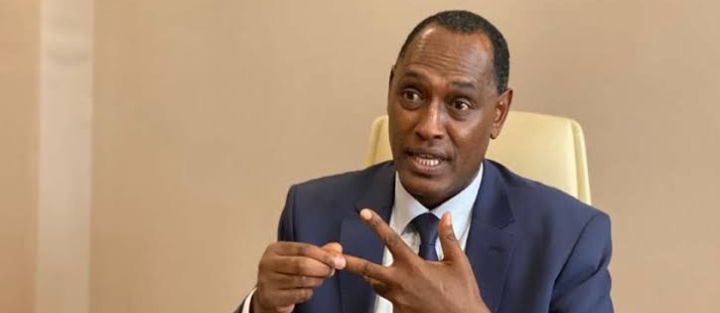
Moïse Nyarugabo Warns Nzanga Mobutu
As the Democratic Republic of Congo continues to grapple with serious security challenges and conflicts rooted in ethnic tensions and political interests, remarks made by Moïse Nyarugabo directed at François Nzanga Mobutu have sparked widespread debate in the political arena.
These statements go beyond mere political disagreement; they reflect deeper discussions about the structure of the Congolese state, its historical background, and the sustainable resolution of its ongoing challenges.
In his message, Nyarugabo pointed out what he described as a dangerous misconception that continues to circulate—namely, the portrayal of Tutsis as foreigners in the Congo. He recalled that although the regime of Mobutu Sese Seko had many shortcomings, it at least demonstrated a certain understanding of the complex ethnic composition of the country.
He emphasized that the Tutsis, like other communities such as the Hema, have long been part of the Congolese population, and that denying this reality constitutes a serious political error that could have severe consequences for national unity.
As these discussions continue, Congolese citizens living abroad have expressed serious concerns, with demonstrations taking place in various countries including the United States, Kenya, and the United Kingdom. This reflects how the issue has transcended national borders and is increasingly taking on an international dimension.
Residents of Minembwe and the surrounding highlands report ongoing insecurity, where various armed actors—including government forces (FARDC), militias such as Wazalendo, FDLR, and others—accuse one another of acts of violence, with civilians bearing the heaviest consequences.
Nyarugabo also criticized a growing tendency among some political leaders to blame Rwanda for all of Congo’s problems. He argued that this approach amounts to an evasion of responsibility, preventing the country from engaging in self-reflection and seeking internally driven solutions.
He further noted that many of Congo’s problems are rooted within the country itself, including ethnic discrimination, the denial of citizenship to certain groups, and the failure to guarantee equal rights for all citizens.
When certain populations are treated as foreigners based on their appearance or origin, it leads to what some describe as “identity-based injustice,” which in turn fuels division and mistrust.
The history of the Congo clearly shows that many of its major crises have been driven more by internal ethnic tensions and misunderstandings among its own people than by external actors alone.
In conclusion, Nyarugabo’s message underscores that what is needed is not the scapegoating of others based on identity, but rather a commitment to truth and accountability. Congolese leaders are urged to elevate their political thinking, look beyond short-term interests, and prioritize national unity.
The choice between ethnically driven hostility and peaceful coexistence is not merely a matter of behavior, but a decision that will shape the country’s future.
Without meaningful changes in mindset and political practice, these challenges are likely to persist and even intensify, continuing to fuel instability and conflict within the country.