
President Ruto Seeks a Second Term as Opposition Figures Form New Parties: Is Kenya Heading Toward an Election That Could Reshape Its Political Landscape? — Read More
As Kenya moves closer to the August 2027 General Election, political activity is intensifying, with opposition politicians increasingly seeking to establish new political parties and movements as they look for ways to challenge President William Ruto.
One of the latest politicians to join this emerging political trend is Caleb Amisi, the Member of Parliament for Saboti, who has launched his own political party, the People’s Renaissance Movement (PRM).
Amisi says the new party seeks to pursue what he describes as Kenya’s “fourth liberation,” with a strong focus on economic development, justice, equality and other reforms that he believes Kenyans urgently need.
During the launch of the party, Amisi particularly called on young people to play a greater role in transforming Kenya’s political landscape. He argued that the time has come for the younger generation to make a meaningful contribution to decisions that will shape the country’s future.
Amisi is among the politicians who were previously associated with the Orange Democratic Movement (ODM) but later broke away from the party after disagreements over its decision to cooperate with President William Ruto’s government.
PRM has already begun establishing a presence at the grassroots level. In June 2026, Amisi campaigned for his party’s candidate in Ol Kalou, indicating that the new political movement is not merely a newly announced organization but is already seeking to establish itself as an electoral force.
IEBC Begins Preparations for the 2027 Election
Kenya’s Independent Electoral and Boundaries Commission (IEBC) has already begun preparations for the 2027 General Election.
The General Election is scheduled for Tuesday, August 10, 2027. The IEBC has established a 2025–2027 election preparation programme outlining the activities to be undertaken ahead of the polls. These include voter registration, verification and updating of the voter register, preparation of election technology and voter education.
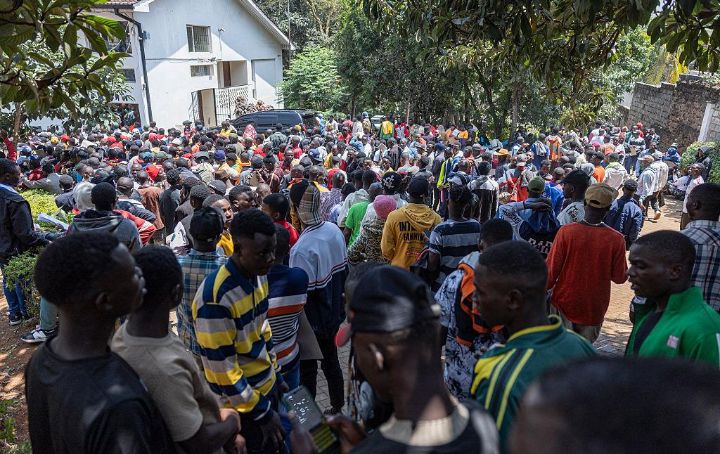
During the first phase of the special voter registration exercise, the IEBC reported that it registered 2,612,725 new voters.
Of this number, 2,345,476 were registered during the 30-day exercise, while another 267,249 were registered through the regular voter registration process at IEBC offices.
By May 2026, the IEBC had registered more than 24.7 million voters and was targeting a total of 28.5 million registered voters ahead of the 2027 election.
The electoral commission has also said it needs to register approximately 6.3 million additional voters, particularly young people, citizens living in hard-to-reach areas and Kenyans residing outside the country.
These developments demonstrate that, despite the election still being about a year away, Kenya has already entered a critical phase of electoral preparations.
Ruto–ODM Cooperation Could Reshape Kenya’s Political Landscape
Politically, the shape of the 2027 election remains far from clear.
President William Ruto and his United Democratic Alliance (UDA) are working to build a broad political coalition ahead of the election. UDA has indicated that it wants to work with other political parties to create a wider political alliance capable of mounting a strong challenge in the 2027 elections.
As part of this strategy, UDA has continued engaging with ODM, one of the most influential political parties in Kenya’s political history. ODM has also indicated that cooperation with Ruto’s administration could continue, a development that has significantly altered the traditional configuration of Kenya’s opposition politics.
This has prompted some politicians who remain within the opposition camp to explore alternative political strategies, including the creation of new parties and the formation of new alliances capable of challenging Ruto.
In other words, the 2027 election could increasingly become a contest between political alliances and coalitions rather than simply a traditional battle between established political parties.
Ruto Confident of Winning a Second Term
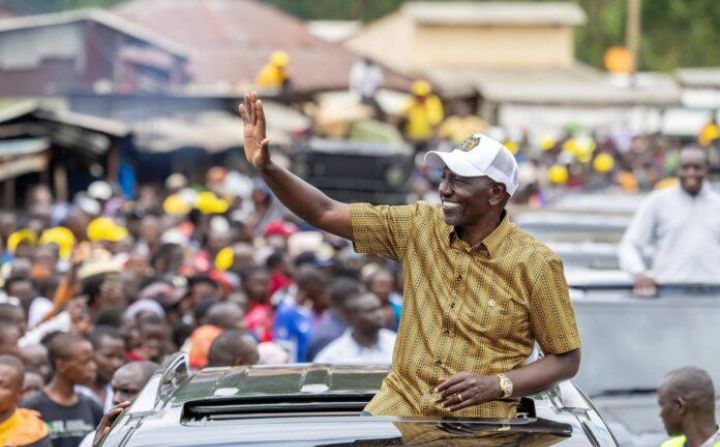
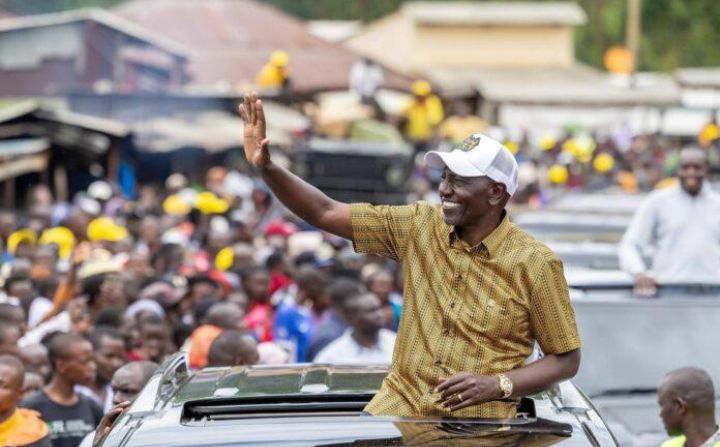
President William Ruto has also made no secret of his ambition to seek a second term in office.
During an interaction with journalists in Wajir on August 1, 2026, Ruto indicated that he was not concerned by political rhetoric calling for an end to his administration after a single term.
Ruto argued that the 2027 election would ultimately be determined by his government’s record rather than political rhetoric and demonstrations.
Although his remarks did not amount to a formal declaration of victory ahead of the election, they demonstrated the President’s confidence in his prospects of securing another term in 2027.
The results of the 2022 presidential election are among the factors contributing to Ruto’s confidence.
In the presidential election held on August 9, 2022, Ruto received 7,176,141 votes, representing 50.49 percent, defeating Raila Odinga, who received 6,942,930 votes, or 48.86 percent of the votes cast for the leading candidates.
Ruto therefore won by a margin of approximately 233,211 votes.
That narrow margin suggests that the 2027 election could be highly competitive, particularly if opposition forces succeed in uniting behind a single candidate.
Polls Give Ruto an Advantage — But No Guaranteed Victory
Although Ruto has the advantage of being the incumbent and having a functioning political machinery behind him, this does not mean that his victory in 2027 is guaranteed.
A TIFA poll released in May 2026 placed Ruto first among the potential presidential contenders, with 24 percent support. He was followed by Kalonzo Musyoka at 19 percent, Fred Matiang’i at 14 percent, Edwin Sifuna at 10 percent and Rigathi Gachagua at 9 percent.
However, the poll also indicated that Ruto’s prospects could change significantly if opposition forces manage to unite and rally behind a single candidate.
This is therefore one of the biggest challenges facing Kenya’s opposition: the issue is not simply whether new political parties can be created, but whether opposition forces can ultimately consolidate their support behind one candidate capable of mounting a serious challenge to Ruto.
Kenya’s Youth Are Becoming an Increasingly Important Political Force
Within Kenya’s evolving political landscape, young people are emerging as an increasingly influential political force.
New politicians such as Caleb Amisi are attempting to build their political messages around reform, economic opportunity, justice and greater youth participation in politics.
This could have a significant impact on the 2027 election, particularly as issues such as the cost of living, employment, taxation and governance continue to dominate Kenya’s political debate.
At the same time, Ruto’s administration is seeking to demonstrate that its economic and development programmes will ultimately win the support of Kenyan voters.
For now, no one can confidently predict who will win the 2027 election.
However, the available signs indicate that William Ruto has entered the race for a second term with the advantages that come with incumbency, while opposition politicians continue searching for ways to unite and construct an alternative political force.
The IEBC, meanwhile, is accelerating its preparations and has already made significant progress in voter registration and broader electoral planning.
At the same time, new political parties such as Caleb Amisi’s PRM are emerging, while UDA and ODM continue exploring political cooperation—developments that could significantly redraw Kenya’s political map before voters head to the polls.
August 10, 2027, will ultimately provide the answer to the political calculations, alliances and competition for votes now taking shape across Kenya.
Until then, one central question will continue to dominate the country’s political debate:
Can William Ruto defend the victory he secured in 2022, or will the opposition succeed in uniting its forces and removing him from power?