
DRC and Rwanda Announce Refugee Repatriation Program; A New Step Toward Resolving the Regional Refugee Crisis
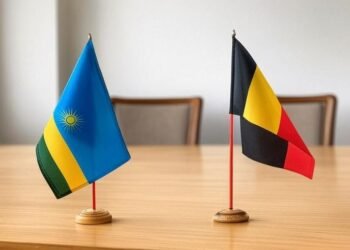
The Government of the Democratic Republic of the Congo (DRC) has announced that, starting in October 2026, it will launch a program aimed at facilitating and supporting the voluntary repatriation of approximately 84,456 Congolese refugees currently hosted in Rwanda. The initiative is part of broader efforts to find a durable solution to the refugee crisis that has affected the Great Lakes region for many years.
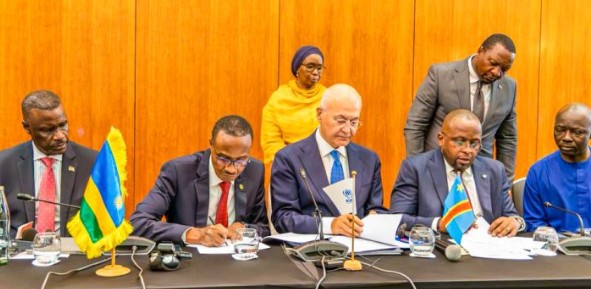
The decision was reached during a high-level special meeting bringing together representatives of the DRC Government, the Government of Rwanda, and the United Nations High Commissioner for Refugees (UNHCR). The meeting was held in Addis Ababa, Ethiopia, on Monday, June 22, 2026.
The meeting took place at a time when the issue of refugees and internally displaced persons remains one of the most pressing challenges facing the region, particularly due to the prolonged insecurity in eastern DRC.
Rwanda was represented at the meeting by the Minister in Charge of Emergency Management, Maj. Gen. (Rtd) Albert Murasira, who also signed the joint communiqué on behalf of Rwanda.
The communiqué reaffirmed the commitment of the Governments of Rwanda and the DRC, together with UNHCR, to continue supporting the voluntary repatriation of refugees and asylum seekers wishing to return home freely, in a manner that respects their rights and dignity.
Participants noted that Rwanda currently hosts 84,456 Congolese refugees, while the DRC accommodates approximately 196,289 Rwandan refugees and asylum seekers, including more than 75,400 individuals who have already been officially registered and documented.
Both parties emphasized that voluntary repatriation remains one of the key pathways toward restoring stability, rebuilding trust among communities, and promoting sustainable peace throughout the region.
The meeting also reviewed progress made under existing voluntary repatriation programs.
Since January 2025, Rwanda has welcomed 8,394 returnees who voluntarily repatriated from various countries. These individuals have received assistance to reintegrate into society and rebuild their lives within their communities.
Of this number, 2,347 returned during 2026 alone. The Government of Rwanda has set a target of receiving at least 10,000 returnees before the end of the year.
Officials attending the meeting highlighted that the experience gained through reception and reintegration programs could also be applied to facilitate the safe and voluntary return of Congolese refugees currently residing in Rwanda.
One of the key issues discussed was how to ensure the safe return of Congolese refugees from Rwanda.
Participants agreed that the DRC Government must continue strengthening security measures and preparing safe return corridors to enable its citizens to return home without fear.
In particular, the DRC committed itself to further improving reception and reintegration mechanisms for returning refugees in order to prevent renewed displacement caused by insecurity or difficult living conditions.
For its part, Rwanda pledged to continue providing all necessary information to ensure that the repatriation process is conducted transparently, cooperatively, and in accordance with international refugee protection standards.
To monitor the implementation of the program, Rwanda, the DRC, and UNHCR agreed to hold quarterly meetings beginning in September 2026.
These meetings will assess the progress of repatriation activities, address emerging challenges, and strengthen coordination among all stakeholders involved.
Officials emphasized that continuous monitoring of such programs is essential to ensure that repatriation efforts are effectively implemented and produce lasting results.
The joint communiqué further indicated that the Kamanyola border crossing on the DRC side and the Bugarama border crossing on the Rwandan side will serve as the main transit points for facilitating refugee repatriation operations.
This decision is particularly linked to efforts aimed at assisting more than 3,600 Rwandan nationals currently in South Kivu Province who have already expressed their willingness to return home.
Rwanda was also informed that more than 400 additional Rwandan nationals have spent over a month in temporary transit centers while awaiting facilitation for their return.
While reaffirming its readiness to support their repatriation, Rwanda stressed the need for caution due to concerns surrounding the Ebola outbreak that continues to pose risks in certain parts of the DRC.
Participants commended UNHCR for its role in bringing together various stakeholders and ensuring that refugee repatriation programs are conducted transparently, safely, and in compliance with international law.
They also expressed appreciation to the Government of Ethiopia for hosting the meeting and for its continued support of dialogue, peacebuilding efforts, and regional cooperation.
The signing of the joint communiqué followed technical meetings held on June 20 and 21, 2026, which laid the groundwork for the ministerial-level discussions that took place on June 22, 2026.
Another meeting of this kind is scheduled to take place in June 2027, with the exact dates and venue to be announced at a later stage.
This new initiative to facilitate the return of Congolese refugees living in Rwanda could represent one of the most significant steps taken in recent years toward reducing the refugee crisis in the Great Lakes region. However, analysts note that its success will largely depend on how effectively the security situation in eastern DRC is addressed, as ongoing insecurity remains the primary factor that forced many refugees to flee their homes.
While all parties have expressed political commitment to resolving this issue, the attention of affected communities and the international community will remain focused on the implementation of these agreements and their ability to provide durable solutions for the thousands of refugees who have spent many years living in exile.