
DRC: UDPS Intensifies Push for Constitutional Change – More Details on the Controversial Reform Project
As political tensions continue to escalate in the Democratic Republic of Congo (DRC), the ruling party, UDPS, has once again reaffirmed its intention to amend the 2006 Constitution by advocating for the restoration of the constitutional framework drafted in 1992 during the Conférence Nationale Souveraine (Sovereign National Conference).
The debate intensified after UDPS Secretary-General Augustin Kabuya publicly declared that the party would not back down from the project and instead intends to accelerate the process in order to provide the country with a Constitution “based on the realities of today’s Congo.”
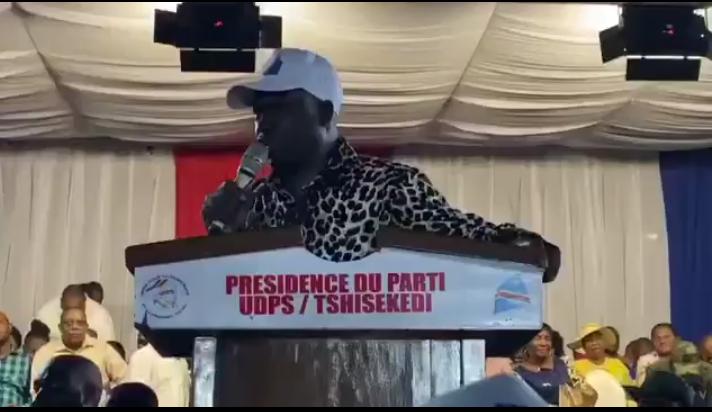
Speaking before UDPS supporters on Sunday, May 17, 2026, Kabuya stated in Lingala that the 1992 Constitution was the only constitutional project freely drafted by Congolese citizens without pressure from foreign powers or political groups pursuing particular interests.
He said:
“We must return to the 1992 Constitution, which was drafted freely by all Congolese people without external pressure. At that time, the process was led by Cardinal Laurent Monsengwo Pasinya. It is possible that the Catholic Church still possesses a copy of it. We will use it, while adapting it to the needs of present-day Congo.”
These remarks clearly indicate that UDPS and the administration of President Félix Tshisekedi remain committed to replacing the current 2006 Constitution, which was adopted following the peace agreements that ended the Second Congo War.
Political analysts in the DRC argue that Tshisekedi’s government has long criticized the 2006 Constitution, claiming that it no longer reflects the country’s current political realities, particularly in matters related to governance, the structure of state institutions, and national sovereignty.
UDPS maintains that the current Constitution was drafted during a period marked by war and international pressure, and therefore does not fully guarantee political independence or effective national governance. Supporters of the reform argue that a new constitutional framework is necessary to address long-standing challenges, including political disputes, insecurity in eastern Congo, and weaknesses within state institutions.
However, critics of President Tshisekedi’s administration argue that the proposed reform could be aimed at expanding presidential powers or altering constitutional provisions in ways that may allow the ruling leadership to remain in power for a longer period.
The 1992 constitutional project was drafted during the Conférence Nationale Souveraine, a historic national conference that brought together political actors, religious leaders, and civil society organizations during the rule of President Mobutu Sese Seko.
The conference was chaired by Cardinal Laurent Monsengwo Pasinya, one of the most influential religious figures in the history of the DRC. Its primary objective was to establish a democratic transition and reform the country’s governance system at the time.
Although the 1992 Constitution was never fully implemented due to subsequent political crises, some UDPS politicians continue to regard it as the “true democratic foundation” of the Congolese state.
The proposed constitutional reform is generating intense debate both domestically and internationally. Opposition groups, human rights organizations, and international analysts warn that changing the Constitution could further heighten political tensions in a country already marked by a long history of power-related conflicts.
There are also growing concerns that the reform process may not involve broad political consensus, a situation that could trigger protests or deepen divisions between supporters of the government and the opposition.
Despite the criticism, UDPS leaders continue to insist that they are determined to move forward with the initiative, arguing that “the time has come to reform the nation.”
As discussions continue to gain momentum, Congolese citizens and the international community are closely watching to see whether President Félix Tshisekedi’s administration will proceed with replacing the 2006 Constitution with the 1992 version, or whether the initiative will face strong political and public resistance.