

Must-Read: The DRC Announces a New Assistance Programme for Displaced Persons, While the Banyamulenge Continue to Report Marginalization After Losing Their Property; A Closer Look at the Situation
As the government of the Democratic Republic of the Congo continues to announce new programmes aimed at assisting populations displaced by conflict to rebuild their lives and achieve self-reliance, some observers are questioning the gap between these statements and their actual implementation, particularly regarding the populations of Minembwe. These communities have, for many years, faced the consequences of armed conflict, violence, forced displacement, and the looting of their property.
These concerns were reignited following a statement by the Minister of State in charge of Social Affairs and Humanitarian Actions, Ève Bazaiba Masudi, announcing that the government has reoriented its policy on assistance to displaced persons, shifting from emergency humanitarian aid to a sustainable approach aimed at the reintegration and empowerment of affected populations.
During a press conference held in Bunia, Ituri Province, on June 18, 2026, Ms. Bazaiba indicated that the government now intends to prioritize a “Nexus” approach, combining humanitarian aid, development, and peace, in order to enable displaced populations to return to normal life.
She emphasized that continuing exclusively with humanitarian assistance does not constitute a sustainable solution for a country facing millions of people affected for many years by insecurity and conflict.
She stated:
“We do not want to continue keeping populations in a state of permanent dependency on aid. It is time to think about sustainable solutions beyond immediate assistance.”
Minister Bazaiba also clarified that the government encourages the voluntary return of populations to their areas of origin when security conditions allow, adding that repatriated individuals will receive support to restart their activities through agriculture, trade, and other development projects.
She cited the territories of Uvira and Kalemie as examples, where some residents have already begun returning home following a gradual improvement in security.
However, despite these government announcements, many residents of Minembwe say they do not recognize themselves in these assistance programmes.
While the authorities in Kinshasa communicate on initiatives to assist displaced persons across the country, several members of the Banyamulenge community in Minembwe believe they are excluded from these mechanisms, despite being among the populations that have endured years of violence and displacement.
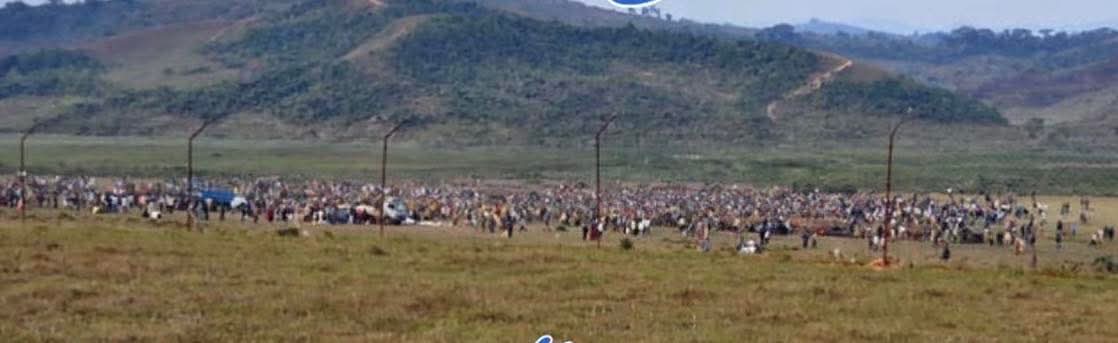
The recurring clashes in the Minembwe region have caused thousands of people to be displaced, while others have sought refuge in neighboring countries, and some continue to live in precarious conditions within the country.
Analysts believe that government programmes primarily target other areas of the country, without visibly including the displaced persons of Minembwe, which raises questions about equal treatment of Congolese citizens.
Some observers also argue that the situation in Minembwe is often addressed solely from a security perspective, rather than as a humanitarian and human rights issue requiring comprehensive attention.
One of the main concerns remains the significant economic losses suffered by the region’s inhabitants.
According to local sources, numerous herds, particularly cattle, were reportedly looted during attacks in various areas of Minembwe and its surroundings.
Some estimates suggest the loss of hundreds of thousands of head of cattle, representing a major economic shock for communities largely dependent on livestock farming.
Residents claim that, to date, no clear government programme for restitution or compensation has been established for the losses incurred, and that no significant assistance has been provided to affected families.
For them, the contrast between national reconstruction announcements and the absence of concrete support reinforces debates on equity in the distribution of public aid.
For its part, the Congolese government maintains that the humanitarian issue remains a priority closely monitored at the highest level.
Minister Bazaiba indicated that President Félix Tshisekedi has instructed that every Friday, during the Council of Ministers, a comprehensive report be presented on the humanitarian situation in the country as well as on Congolese refugees abroad.
She also noted that the government continues to work with various partners to find solutions to urgent humanitarian needs.
On January 28, 2026, the government of the DRC, in collaboration with international organizations, launched an initiative aimed at mobilizing 1.4 billion US dollars to respond to the needs of populations affected by conflict and other humanitarian crises.
However, while these funds are intended to benefit several million people, estimates indicate that around 15 million people remain in urgent need of assistance, while available resources would only cover approximately 7.3 million beneficiaries.
In this context, as the government emphasizes that a sustainable solution depends on the return of peace, development, and the strengthening of community resilience, one question remains among many residents of Minembwe: when will they be fully included in these programmes, after years of conflict, forced displacement, and massive losses of property, without tangible assistance from the state in Kinshasa?