

Rwanda Strongly Rejects HRW Report, Calls for an Impartial Assessment of the Conflict in the DRC
As insecurity in the eastern part of the Democratic Republic of the Congo (DRC) continues to remain one of the most significant issues affecting relations within the Great Lakes region and the broader international community, the Government of Rwanda has once again criticized a report published by Human Rights Watch (HRW), accusing the organization of bias and of presenting allegations that it says are not supported by sufficient evidence.
The remarks were made by Rwanda’s Government Spokesperson, Yolande Makolo, following the publication of an HRW report on June 10, 2026, addressing alleged human rights violations in eastern DRC. The report included allegations related to civilian deaths, arbitrary detentions, and the forced recruitment of civilians into armed groups.
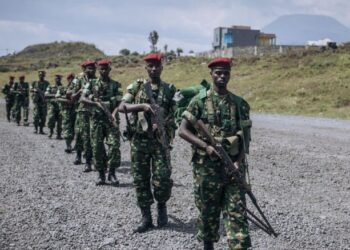
In its report, Human Rights Watch identified the Rwanda Defence Force (RDF) as one of the key actors contributing to the ongoing security challenges in North Kivu and South Kivu provinces.
However, the Government of Rwanda argues that the report goes too far in attempting to associate the RDF with the AFC/M23 coalition, a position Kigali views as a distortion of the facts and a failure to acknowledge the complex realities of the conflict.
In a statement posted on X, Yolande Makolo said that Human Rights Watch has, for more than three decades, employed what she described as the same approach when reporting on Rwanda, including the use of anonymous sources, limited field verification, and the publication of conclusions before conducting comprehensive investigations.
She stated:
“It should be made clear: the RDF is not AFC/M23. Any credible investigation requires impartiality, access to the locations where events occurred, the collection of verifiable evidence, and the avoidance of premature conclusions.”
According to the Rwandan government, one of the key issues that Human Rights Watch has failed—or declined—to adequately address is the role of the DRC government in supporting and collaborating with the Democratic Forces for the Liberation of Rwanda (FDLR).
The FDLR is regarded by Rwanda and several other countries as a terrorist organization, composed largely of individuals linked to the perpetrators of the 1994 Genocide against the Tutsi and their descendants.
Kigali maintains that the Armed Forces of the Democratic Republic of the Congo (FARDC) continue to cooperate closely with the FDLR, local Wazalendo militias, foreign mercenaries, and Burundian troops in military operations against AFC/M23.
Makolo noted that Human Rights Watch itself acknowledges the existence of these groups and their cooperation, yet its report focuses primarily on Rwanda and AFC/M23—an approach that Rwanda views as evidence of bias.
She said:
“Kinshasa arms, finances, and works closely with the FDLR, Wazalendo militias, foreign mercenaries, and Burundian forces. Ignoring these realities cannot provide an accurate picture of what is happening in eastern DRC.”
One of the most debated aspects of the HRW report concerns its use of satellite imagery, which the organization said showed possible evidence of killings and potential mass graves.
However, the Government of Rwanda argues that Human Rights Watch did not definitively establish that the sites identified were in fact graves, but rather described them as locations resembling graves.
Kigali contends that publicizing serious allegations before the available evidence has been conclusively verified risks misleading the public and presenting an incomplete account of events.
The Rwandan government also criticized what it described as a contradiction in the report’s methodology, noting that while HRW presents findings from its investigation, it simultaneously calls for additional independent investigations.
According to Kigali, this suggests that the conclusions presented are not yet based on fully established facts.
Makolo stated:
“An investigation that reaches conclusions before all the evidence has been gathered should not be considered a credible investigation.”
To reinforce its concerns regarding Human Rights Watch, Rwanda also referred to the organization’s 2017 report titled “All Thieves Must Be Killed,” which alleged that 43 individuals in Rwanda’s Western Province had been killed or forcibly disappeared.
According to findings published in 2024 by Rwanda’s National Commission for Human Rights following its own investigation, some of the individuals whom HRW had reported as dead were found to be alive, while others had died from natural causes.
Kigali argues that this case demonstrates a pattern in which Human Rights Watch occasionally publishes reports without sufficient verification and subsequently fails to publicly acknowledge or correct inaccuracies.
The Government of Rwanda is not alone in expressing criticism of Human Rights Watch.
In May 2026, the AFC/M23 coalition also rejected an HRW report published on May 14, 2026, which accused the group of killing civilians, committing sexual violence against women, and abducting residents in the city of Uvira between December 2025 and January 2026.
AFC/M23 argued that Human Rights Watch failed to address the role of the FDLR and its cooperation with FARDC, choosing instead to focus exclusively on allegations directed at the movement.
The coalition stated that such an approach undermines the organization’s credibility among observers closely following the security situation in eastern DRC.
Today, the crisis in eastern DRC is no longer solely a military conflict; it has also become a battleground of competing narratives and diplomatic disputes among various stakeholders.
While the DRC, several Western countries, and international organizations continue to accuse Rwanda of supporting AFC/M23, Kigali consistently rejects those allegations, maintaining that the core issue remains the continued existence of the FDLR and its collaboration with the government in Kinshasa.
Meanwhile, the Washington peace framework and other mediation initiatives led by regional countries and international partners continue to be pursued as potential pathways toward a lasting solution to the long-running conflict in eastern DRC.
The Government of Rwanda maintains that sustainable peace cannot be achieved through accusations and sanctions alone, but rather through constructive dialogue, evidence-based assessments, and respect for international agreements aimed at restoring security, stability, and cooperation across the Great Lakes region.