
Three Presidents Unite in Search of Lasting Peace for Eastern DR Congo
MINEMBWE CAPITAL NEWS (MCN)
As the Democratic Republic of Congo (DRC) continues to face serious security and political challenges, President Félix Tshisekedi appears to be intensifying his diplomatic efforts by seeking greater regional cooperation in order to find a pathway that could help the country overcome a crisis that has persisted for many years.
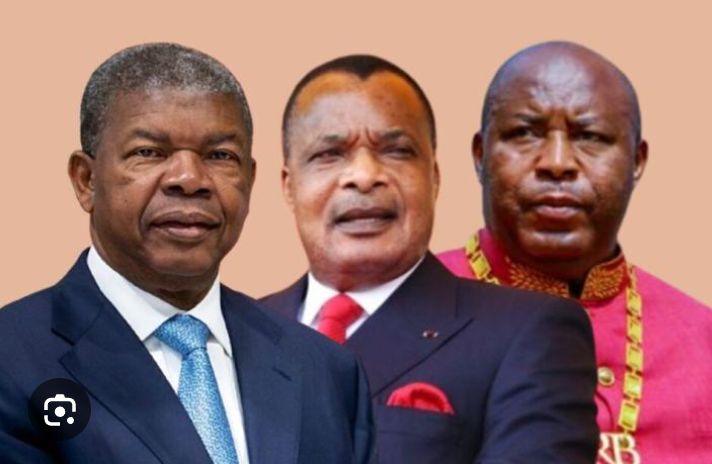
Political analysts indicate that a renewed diplomatic alignment is emerging among President João Lourenço of Angola, Denis Sassou-Nguesso of the Republic of Congo (Congo-Brazzaville), and Évariste Ndayishimiye of Burundi. This diplomatic framework, which some observers refer to as the “Lourenço–Sassou–Ndayishimiye Axis,” is increasingly gaining attention as a potential mechanism for addressing the challenges facing the DRC.
Diplomatic sources suggest that the authorities in Kinshasa are increasingly focusing on regional diplomatic initiatives and discussions taking place in foreign capitals, rather than relying solely on internal solutions to address the country’s prolonged crisis.
This approach is reflected in the continued missions carried out by President Félix Tshisekedi’s special envoys and the messages being delivered to regional heads of state. On July 10, 2026, President Tshisekedi’s special envoy, Antoine Ghonda Mangalibi, delivered a message from the Congolese president to Angolan Foreign Minister Tete António, intended for President João Lourenço. Although Angolan authorities confirmed that the message was received, they did not disclose its contents.
Diplomatic observers say the move demonstrates Kinshasa’s continued efforts to strengthen relations with Luanda as part of broader attempts to promote dialogue among the various parties involved in the DRC crisis.
Since the beginning of 2026, Angola has continued to play a prominent role as a mediator in peace efforts related to the situation in the DRC.
On January 14, 2026, President João Lourenço hosted representatives of CENCO and ECC in Luanda, where they sought support for the establishment of inclusive and comprehensive dialogue involving different Congolese stakeholders.
In the months that followed, President Tshisekedi visited Angola twice and sent several diplomatic missions. Meanwhile, Angola also continued dispatching envoys to Kinshasa in an effort to maintain dialogue and diplomatic engagement.
However, some reports indicate that President Lourenço may have begun expressing dissatisfaction with the way some of his proposals have been received by the Kinshasa government. Some analysts believe this could be contributing to a gradual redistribution of diplomatic influence, with greater involvement from other regional leaders, particularly Denis Sassou-Nguesso and Évariste Ndayishimiye.
Recently, President Évariste Ndayishimiye, who also serves as the Chairperson of the African Union (AU), hosted religious leaders and opposition figures from the DRC in Bujumbura in an effort to encourage constructive dialogue aimed at strengthening national unity.
At the same time, President Denis Sassou-Nguesso continued receiving various Congolese leaders, including Cardinal Fridolin Ambongo and Bishop Donatien Nshole, who held discussions on the political and security challenges affecting the country.
Following these discussions, Bishop Donatien Nshole stated that President Sassou-Nguesso had expressed serious concerns over the situation in the DRC, warning that instability in the country could have significant consequences for the entire region.
Cardinal Fridolin Ambongo has also continued emphasizing that the crisis in eastern DRC should not be treated as a normal situation, but rather as a serious humanitarian and security challenge affecting the lives of millions of Congolese people who continue to suffer from the consequences of conflict.
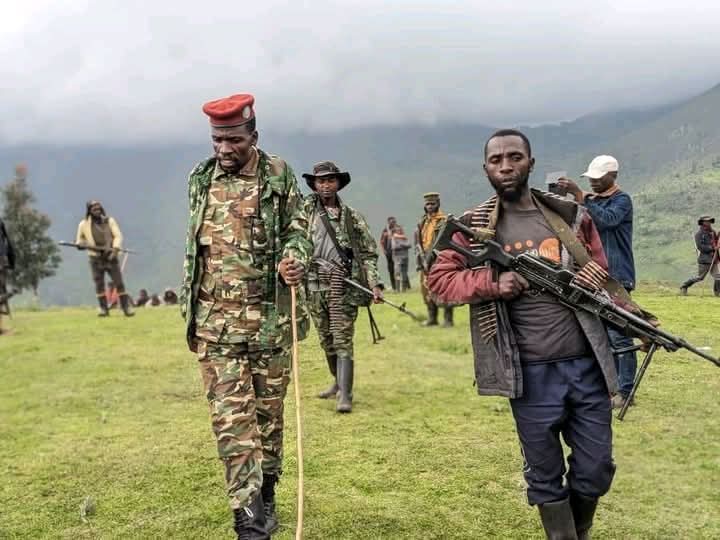
Despite these growing diplomatic efforts, armed conflict in the provinces of North Kivu and South Kivu continues.
Several areas remain under the control of the Alliance Fleuve Congo (AFC/M23), a movement that seeks to bring an end to President Félix Tshisekedi’s administration in Kinshasa, while peace talks held in Washington and Doha have yet to produce concrete results capable of ending the conflict.
These developments are also unfolding amid ongoing domestic debates over possible constitutional reforms or amendments, a situation that has further intensified political tensions ahead of the end of President Félix Tshisekedi’s current term.
Opposition figure Jean-Marc Kabund stated that the manner in which President Tshisekedi’s message was delivered to Angola could carry political significance.
He noted that, traditionally, messages between heads of state are often delivered through special envoys directly to their counterparts. Therefore, the fact that this particular message was handed to Angola’s Foreign Minister could be interpreted as a diplomatic approach with broader political implications.
Although diplomatic activities continue to increase, the proposed Congolese national dialogue initiative supported by Angola since February 2026 has yet to officially begin.
International media reports indicate that various parties remain divided over the structure of the dialogue, the participants who should be included, and the procedures that should guide the process. These disagreements continue to delay the implementation of the initiative.
The renewed cooperation between João Lourenço, Denis Sassou-Nguesso, and Évariste Ndayishimiye highlights the fact that the DRC crisis is increasingly being viewed as a regional issue rather than solely a national challenge.
However, despite the growing diplomatic engagement, achieving lasting peace will require genuine consensus among all parties involved, as well as the effective implementation of any agreements reached.
As fighting continues in eastern DRC, citizens and the international community are closely watching to determine whether this emerging diplomatic framework will deliver meaningful results or become another cycle of negotiations without a lasting solution.