

UN Hears the DRC’s Call: Kinshasa Urges the World to Turn Natural Resources into a Foundation for Peace, Not a Driver of Conflict
MINEMBWE CAPITAL NEWS (MCN)
At a meeting of the United Nations Security Council, the Democratic Republic of the Congo (DRC) called on the international community to take decisive action to ensure that natural resources become a foundation for peace and sustainable development rather than a source of conflict, insecurity, and cross-border exploitation.
The appeal was made on 13 July 2026 during a high-level Security Council meeting held at the United Nations Headquarters, convened at the request of the DRC, which holds the Presidency of the UN Security Council for the month of July. The session focused on how international legal and governance frameworks can be strengthened to ensure that natural resources contribute to peacebuilding instead of fueling armed conflict.
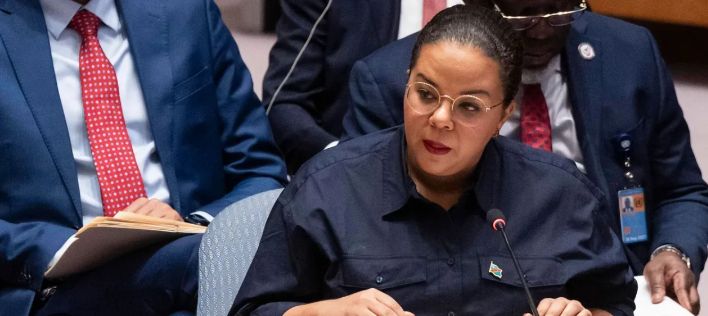
DRC Minister of Foreign Affairs Thérèse Kayikwamba Wagner stated that discussions involving UN Member States, experts, and international partners underscored that the fundamental challenge is not the existence of natural resources themselves, but rather the way they are governed and how the revenues they generate are managed.
She said:
“Natural resources are not inherently destined to fuel conflict. When managed responsibly and governed by legitimate institutions, they can drive economic growth, create jobs, support industrial development, and promote shared prosperity.”
She further explained that when governance systems are weak, extraction is carried out illegally, or revenues from natural resources are diverted to finance armed groups and criminal networks, those resources become a catalyst for conflict, undermine state institutions, and deepen the suffering of civilian populations.
In her address, Kayikwamba Wagner emphasized that combating the illegal exploitation and trade of natural resources should not be the responsibility of producing countries alone.
She stressed that every actor throughout the global supply chain shares responsibility, including:
- Transit countries;
- Importing countries;
- Traders and processors;
- Financial institutions;
- International organizations; and
- End users and consumers.
She further argued that traceability of natural resources must become a shared international responsibility rather than a burden placed solely on resource-rich countries.
Participants acknowledged that although several international mechanisms already exist—including the Kimberley Process, the OECD Due Diligence Guidance for Responsible Mineral Supply Chains, UN sanctions regimes, and the work of UN expert panels—significant gaps remain in their implementation and coordination.
Many delegates called for stronger alignment and better coordination among these mechanisms to more effectively prevent the illegal exploitation of natural resources and disrupt the financing of armed conflicts through illicit resource trade.
The meeting also highlighted differing views on whether new international legal instruments are needed. While some participants advocated for new global frameworks, others argued that priority should instead be given to strengthening and fully implementing existing mechanisms. Despite these differences, there was broad consensus that effective implementation of current standards is more important than creating additional rules that may remain unenforced.
The DRC Government urged the international community to shift from a reactive approach to one focused on conflict prevention.
Minister Kayikwamba stressed that the world should not wait until natural resources are used to purchase weapons, finance armed groups, or force civilian displacement before taking action to improve resource governance.
She stated:
“We must move beyond reacting after crises have already erupted and instead invest in preventing them before they occur. That is the path that will allow natural resources to become a source of cooperation, trust, and lasting peace.”
The meeting forms part of a broader series of initiatives led by the DRC during its presidency of the UN Security Council. It followed another high-level session held on 8 July 2026, chaired by Prime Minister Judith Suminwa Tuluka, which focused on conflict-related sexual violence.
Through these initiatives, the DRC Government continues to emphasize that sustainable peace cannot be achieved without dismantling war economies, protecting civilians, and ensuring justice for victims.
These discussions come as eastern DRC continues to face persistent security challenges despite ongoing diplomatic efforts, including the Washington Agreement between Kinshasa and Kigali and the Doha peace talks facilitated by Qatar.
Although these diplomatic initiatives have been welcomed internationally as important steps toward peace, armed violence continues in several parts of North Kivu and South Kivu, highlighting the persistent gap between diplomatic commitments and realities on the ground.
Analysts argue that lasting peace will only be achieved when natural resources are managed transparently, their benefits are shared equitably among the population, and they cease to serve as a source of financing for armed groups and violent conflict.