
President Ndayishimiye Expected in Kinshasa as Burundian Troops Continue to Suffer Losses in Fighting Against Banyamulenge: Key Details on His Visit and Expected Talks with Tshisekedi
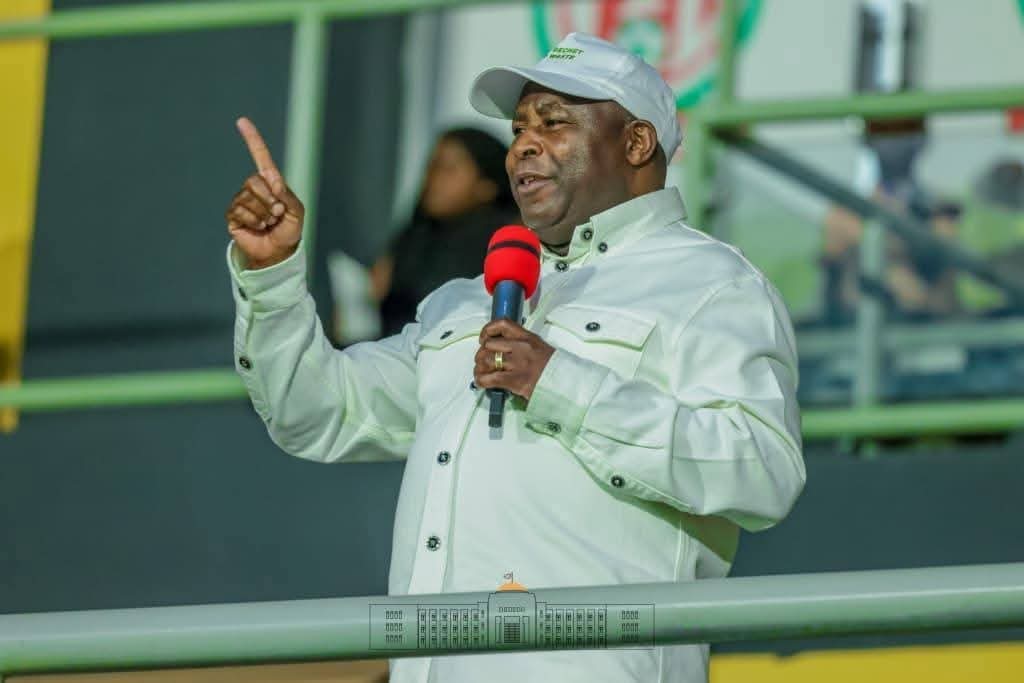
President of Burundi and current Chairperson of the African Union (AU), Évariste Ndayishimiye, is expected in Kinshasa on Monday, June 22, 2026, for a two-day official visit aimed at holding discussions with President Félix Antoine Tshisekedi on major issues related to security, bilateral cooperation, and the future of the Great Lakes region.
According to the Presidency of the Democratic Republic of Congo (DRC), the visit comes at a time when the security situation in eastern Congo continues to evolve, with ongoing military operations and conflicts among various actors reshaping the dynamics of the war in South Kivu.
Over recent years, President Félix Tshisekedi’s security policy in eastern DRC has largely focused on seeking support from allied countries and strengthening military cooperation with regional partners.
As part of efforts to combat armed groups operating in eastern Congo, the Kinshasa government prioritized military cooperation agreements with Burundi and other neighboring countries. This cooperation led to the deployment of Burundian troops in South Kivu to support the Armed Forces of the Democratic Republic of Congo (FARDC) in military operations aimed at restoring security and re-establishing state authority in various areas.
However, despite Kinshasa’s continued insistence that this cooperation remains essential in the fight against armed groups, observers closely monitoring developments in the region argue that military solutions have not achieved the expected objectives, particularly in Minembwe and other parts of the Hauts Plateaux of Fizi, Uvira, and Mwenga territories.
On the Burundian side, President Évariste Ndayishimiye has consistently pursued a policy of active involvement in addressing security challenges across the Great Lakes region.
Bujumbura maintains that the presence of its troops in Congo is linked to the protection of the shared border between the two countries and the fight against armed groups that could threaten Burundi’s national security.
This policy has positioned Burundi as one of Kinshasa’s key partners in its campaign against armed groups operating in eastern DRC.
As leaders of the two countries prepare for discussions in Kinshasa, reports from Minembwe continue to indicate ongoing intense fighting between a coalition composed of FARDC, Burundian forces, and Wazalendo militias on one side, and the MRDP-Twirwaneho movement, which claims to defend the Banyamulenge community, on the other.
Information from local residents and various sources operating in the area indicates that military operations conducted in Lundu, Bidegu, Kalongi, Kalingi, and Gitavi reportedly resulted in significant casualties among Burundian soldiers and FARDC troops. These clashes were followed by heavy fighting in Gakenke, Kwa Rutaganda, Sinai, Nyaruhinga, and Mukoko, where substantial losses are also reported among Burundian forces, FARDC troops, as well as Wazalendo and FDLR fighters.
Reports circulating in Minembwe suggest that some of the troops deployed in these operations encountered severe setbacks. However, no independent body has yet released verified figures or officially confirmed information regarding the outcomes of the fighting. Nevertheless, sources considered reliable claim that these areas are now under the control of MRDP-Twirwaneho following the withdrawal of government-aligned forces.
Among residents of Minembwe and observers of security issues affecting the Banyamulenge community, it is widely reported that one of the key objectives of FARDC and its allies was to secure strategic transportation and communication routes, including Minembwe Airstrip. However, various reports indicate that these objectives were not achieved.
For its part, supporters of MRDP-Twirwaneho argue that the movement’s operations have focused on preventing what they describe as attacks against the Banyamulenge population and protecting local civilians. The group claims to have successfully repelled military offensives aimed at capturing strategic areas of Minembwe.
Regional political analysts believe that discussions between President Félix Tshisekedi and President Évariste Ndayishimiye are likely to focus on ways of maintaining or restructuring military cooperation between Kinshasa and Bujumbura.
While the Congolese government seeks to strengthen collaboration with its partners in addressing security challenges, Burundi may also seek to reinforce its position as one of the key regional actors involved in efforts to find solutions to the region’s persistent instability.
At the same time, the ongoing security concerns reported in Minembwe and other parts of South Kivu are expected to remain among the major issues shaping the future of this cooperation.
President Évariste Ndayishimiye’s visit to Kinshasa comes at a time when military cooperation between the DRC and Burundi remains at a high level, but also during one of the most challenging periods of insecurity in eastern Congo. As the leaders of both countries discuss the future of regional security, the people of Minembwe and the wider Great Lakes region will be closely watching the outcomes of these talks and their potential impact on the security challenges that continue to affect South Kivu.